
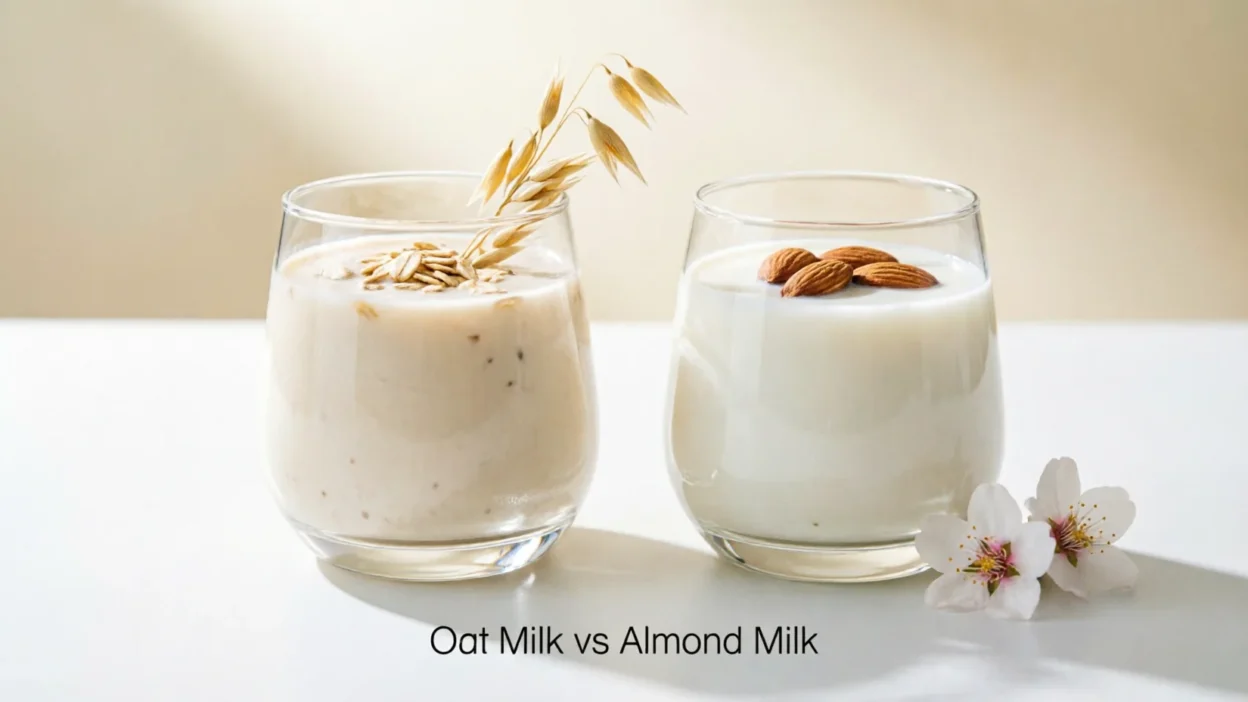
If you are choosing between oat milk vs almond milk, the main difference is simple: oat milk is usually creamier, slightly sweeter, and higher in carbohydrates, while almond milk is generally lighter, lower in calories, and has a mild nutty flavor. Both are popular plant-based alternatives to dairy milk.
The better choice depends on what you want from your milk. Oat milk can work especially well in coffee, smoothies, cereal, and recipes where you want a rich texture.
Almond milk is often preferred when you want a lighter drink with a subtle flavor. Their nutrition also varies considerably by brand, so checking the nutrition label is important.
Understanding their differences can help you choose the right option for your taste, dietary needs, cooking habits, and everyday routine.
Quick Answer
Oat milk is creamier, naturally sweeter, and usually higher in carbohydrates. Almond milk is lighter, thinner, and often lower in calories and carbohydrates. Choose oat milk for coffee and creamy recipes; choose almond milk for a lighter drink, cereal, or lower-calorie options.
Why Do People Confuse Oat Milk and Almond Milk?
People often compare oat milk and almond milk because both are non-dairy beverages made from plants. They can be used in similar ways, including coffee, tea, cereal, smoothies, baking, and cooking.
However, they are made from different ingredients and have noticeably different textures and flavors. Oat milk is made primarily from oats and water, while almond milk is made from almonds and water.
Another reason for confusion is that nutrition differs from one product to another. Some brands add sugar, vitamins, minerals, oils, gums, or other ingredients. Therefore, two products with the same type of milk can have different nutritional profiles.
First Word: Oat Milk
Oat milk is a plant-based beverage made by processing oats with water. It usually has a creamy texture and a naturally mild, slightly sweet taste.
Because oats contain carbohydrates, oat milk often contains more carbohydrates than unsweetened almond milk. Many commercial varieties are also fortified with nutrients such as calcium and vitamin D.
Oat milk is particularly popular in coffee because its creamy texture can blend smoothly with espresso and create a rich mouthfeel.
Example:
“I usually order a latte with oat milk because I like its creamy texture.”
Second Word: Almond Milk
Almond milk is a plant-based beverage made from almonds and water. It usually has a thinner texture and a mild nutty flavor.
Unsweetened almond milk is often relatively low in calories and carbohydrates compared with oat milk, although exact amounts depend on the brand and formulation.
Almond milk can be used in cereal, smoothies, coffee, baking, and other recipes. Some people prefer it because its lighter taste does not overpower other ingredients.
Example:
“She uses unsweetened almond milk in her morning smoothie.”
Oat Milk vs Almond Milk: Comparison Table
| Feature | Oat Milk | Almond Milk |
|---|---|---|
| Main ingredient | Oats | Almonds |
| Texture | Creamier and thicker | Lighter and thinner |
| Flavor | Mild and slightly sweet | Mild and nutty |
| Carbohydrates | Usually higher | Usually lower |
| Calories | Often higher | Often lower, especially unsweetened |
| Coffee | Excellent for creamy drinks | Works well but may taste lighter |
| Cereal | Good | Good |
| Baking | Good | Good |
| Nut-free | Usually yes | No |
| Common choice for | Creaminess and coffee | Lightness and lower-calorie options |
Nutrition and ingredients vary by brand, so check the product label for exact values.
When Should You Use Oat Milk or Almond Milk?
Choose Oat Milk When You Want a Creamier Texture
Oat milk is a good option when texture matters. It can make coffee, smoothies, oatmeal, and sauces feel richer.
It is also commonly chosen for lattes and other espresso-based drinks because it tends to complement coffee with its creamy consistency.
Choose Almond Milk When You Want Something Lighter
Almond milk can be useful when you prefer a thinner beverage with a mild nutty taste.
Unsweetened versions are often especially popular among people looking for a lower-calorie, lower-carbohydrate plant-based beverage.
Choose Based on Allergies and Dietary Needs
Almond milk contains tree nuts, so it may not be suitable for people with almond or tree-nut allergies.
Oat milk is generally nut-free, but people with specific allergies or intolerances should always check the ingredient and allergen statement because manufacturing practices and added ingredients vary.
10+ Examples of Oat Milk vs Almond Milk
- Coffee: Oat milk gives coffee a creamy, rich texture, while almond milk provides a lighter result.
- Latte: Oat milk is often preferred when you want a smooth, creamy latte.
- Cereal: Both work well, depending on whether you prefer a creamy or lighter taste.
- Smoothies: Almond milk can provide a lighter base, while oat milk can make a smoothie thicker.
- Oatmeal: Oat milk can add extra creaminess to cooked oats.
- Baking: Both can replace dairy milk in many recipes, although the final texture and flavor may change.
- Pancakes: Either can work as a milk substitute in pancake batter.
- Tea: Almond milk offers a subtle nutty flavor, while oat milk can make tea taste creamier.
- Hot chocolate: Oat milk can create a richer mouthfeel.
- Protein shakes: Either can work depending on the desired calories, texture, and flavor.
- Cooking: Oat milk may be useful in recipes where creaminess is desirable.
- Drinking alone: Almond milk may appeal to people who prefer a lighter beverage, while oat milk suits those who enjoy a richer taste.
Common Mistakes
Assuming Every Brand Has the Same Nutrition
Different brands can have different amounts of calories, sugar, carbohydrates, protein, and added nutrients.
Confusing “Unsweetened” With “Sugar-Free”
Unsweetened usually means no sugar has been added. It does not necessarily mean the product contains absolutely no naturally occurring sugars or carbohydrates.
Ignoring Added Ingredients
Some plant milks contain oils, stabilizers, gums, flavorings, or added sweeteners. Read the ingredient list if this matters to you.
Assuming Plant Milk Is Automatically Healthier
“Plant-based” does not automatically mean one product is nutritionally better for everyone. Compare the nutrition facts and ingredients with your personal needs.
Forgetting About Allergens
Almond milk is made from almonds, so people with relevant tree-nut allergies need to avoid it.
Memory Trick
Remember:
OAT = Often A creamier Taste
ALMOND = A lighter, Lightly nutty Milk Often Naturally lower in calories Depending on the product.
The simplest trick is:
Oat = creamy. Almond = light and nutty.
American vs British English
The terms oat milk and almond milk are used in both American and British English.
There is no major spelling difference between the two terms.
For example:
- American English: “I prefer oat milk in my coffee.”
- British English: “I prefer oat milk in my coffee.”
Both varieties commonly use the same vocabulary when discussing plant-based milk alternatives.
Similar Words
Here are some related terms you may see when comparing these beverages:
- Plant milk — a broad term for milk-like beverages made from plants.
- Dairy milk — milk produced from mammals such as cows.
- Soy milk — a plant-based beverage made from soybeans.
- Coconut milk — a coconut-based beverage that can vary greatly in composition and use.
- Rice milk — a plant-based beverage made from rice.
- Unsweetened milk — a product with no added sugar.
- Fortified milk alternative — a beverage with nutrients added during processing.
- Non-dairy milk — a common term for milk alternatives that do not come from dairy animals.
Final Verdict
So, oat milk vs almond milk is not really about one being universally better than the other. The right choice depends on your preferences and nutritional priorities.
Choose oat milk if you want a creamy texture, mild sweetness, and a milk alternative that works particularly well in coffee. Choose almond milk if you prefer a lighter texture and mild nutty flavor, especially when using an unsweetened variety.
Always compare nutrition labels because calories, sugar, protein, carbohydrates, and added nutrients can vary significantly between brands.
FAQs:
Is oat milk healthier than almond milk?
Neither is automatically healthier for everyone. Oat milk and almond milk have different nutritional profiles. Your best choice depends on factors such as calories, carbohydrates, protein, added sugar, allergies, and your overall diet.
Which is better for coffee, oat milk or almond milk?
Oat milk is often a good choice for coffee because it generally has a creamier texture and blends well with espresso. Almond milk can also be used, especially if you prefer a lighter drink with a mild nutty flavor.
Is almond milk lower in calories than oat milk?
Unsweetened almond milk is often lower in calories than oat milk, but products vary by brand. Always check the nutrition facts panel rather than assuming every almond milk has the same calorie content.
Does oat milk contain more carbohydrates than almond milk?
Generally, yes. Oats naturally provide carbohydrates, so oat milk commonly contains more carbohydrates than unsweetened almond milk. Exact amounts depend on how the product is made and whether other ingredients are added.
Can I use oat milk instead of almond milk?
Yes. In many everyday uses, such as cereal, smoothies, coffee, pancakes, and baking, you can substitute one for the other. However, the taste and texture of the finished food may change.
Is oat milk nut-free?
Oat milk itself is generally made from oats rather than nuts. However, people with severe allergies should check the packaging for allergen information and possible cross-contact warnings.
Which tastes better, oat milk or almond milk?
Taste is personal. Oat milk is usually creamier and mildly sweet, while almond milk tends to be lighter with a subtle nutty flavor. Trying both can help you decide which one you prefer.
Remember This
Oat milk = creamy, mildly sweet, and usually higher in carbohydrates.
Almond milk = lighter, mildly nutty, and often lower in calories and carbohydrates when unsweetened.
Neither option is automatically best for everyone. Check the label, consider your dietary needs, and choose the one that fits your taste and intended use.
Conclusion
The difference between oat milk and almond milk becomes easier to understand once you focus on their basic characteristics. Oat milk is generally creamier and slightly sweeter, making it especially appealing in coffee, smoothies, oatmeal, and recipes where you want a richer texture.
Almond milk is usually lighter and has a mild nutty flavor, making it a popular choice for cereal, smoothies, and everyday drinking.
Ultimately, your choice should depend on what you value most. If creaminess and coffee performance are important, oat milk may be the better fit. If you prefer a lighter beverage or an unsweetened option with fewer calories, almond milk may suit you better. Since formulations vary by brand, checking the nutrition and ingredient labels is the smartest final step.

Evelyn Mia is a passionate language writer and vocabulary enthusiast at Synomity.com, specializing in synonyms, word meanings, and language learning. She creates informative content that helps readers expand vocabulary and communicate more effectively.