
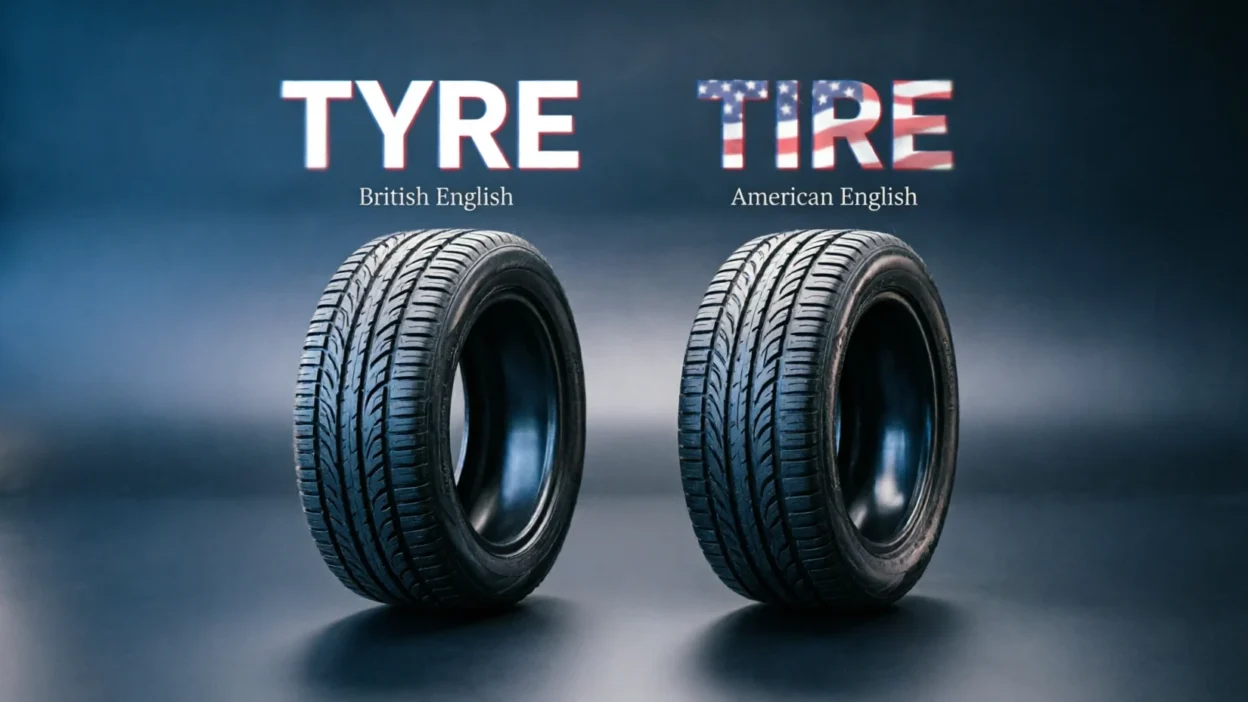
If you are wondering whether tyre or tire is correct, the answer is: both spellings are correct, but they are used in different varieties of English. Tyre is the standard spelling in British English, while tire is the standard spelling in American English when referring to the rubber covering around a wheel.
For example, someone in the UK may say, “I need to replace my car tyres,” while someone in the US would normally write, “I need to replace my car tires.”
The difference is mainly a matter of regional spelling, not meaning. However, tire has another common meaning in English: to become tired or to make someone tired.
Understanding the difference between these spellings can help students, ESL learners, and writers choose the form that matches their audience. Whether you are writing about cars, bicycles, motorcycles, or everyday English, this guide explains when to use tyre and tire clearly.
Quick Answer
Tyre and tire can refer to the rubber covering around a vehicle wheel. Tyre is preferred in British English, including British-style English used in countries such as the UK, Australia, and New Zealand. Tire is the standard American English spelling. Tire also means to become or make someone tired.
Why Do People Confuse Tyre and Tire?
People often confuse tyre and tire because they have the same pronunciation and the same meaning when they refer to a vehicle wheel.
The main difference is regional spelling:
- Tyre → British English
- Tire → American English
- Tire → also means to become tired or make someone tired
For example:
- The car has a flat tyre. (British English)
- The car has a flat tire. (American English)
- I tire easily after a long day. (verb)
First Word: Tyre
Tyre is the British English spelling for the rubber covering fitted around a wheel.
It is commonly used when talking about:
- Car tyres
- Bicycle tyres
- Motorcycle tyres
- Truck tyres
- Tyre pressure
- Tyre repair
- Tyre replacement
Examples of Tyre
- My car needs four new tyres.
- Check the tyre pressure before driving.
- One of the rear tyres is flat.
- The bicycle has a damaged tyre.
- I need to take my car to a tyre shop.
If you are following British English spelling, tyre is the appropriate choice for the wheel-related meaning.
Second Word: Tire
Tire is the standard American English spelling for the rubber covering around a wheel.
Examples include:
- My car needs new tires.
- Check your tire pressure.
- One of the tires is flat.
- I bought new tires for my truck.
However, tire has another meaning as a verb. It can mean to become tired or to make someone tired.
For example:
- I tire quickly after running.
- The long journey tired me.
- She never seems to tire of reading.
So, context is important when you see the word tire.
Tyre vs Tire: Comparison Table
| Word | Main Use | Variety of English | Example |
|---|---|---|---|
| Tyre | Rubber covering around a wheel | British English | The front tyre is damaged. |
| Tire | Rubber covering around a wheel | American English | The front tire is damaged. |
| Tire | Become or make tired | British & American English | Long walks tire me. |
The spelling difference between tyre and tire does not change the meaning when you are talking about a vehicle wheel.
When Should You Use Tyre or Tire?
Choose the spelling based on the variety of English you are using.
Use “Tyre” When Writing British English
Use tyre for the wheel-related meaning in British English.
Examples:
- I need to change a tyre.
- The tyre has lost pressure.
- These tyres are designed for wet roads.
Use “Tire” When Writing American English
Use tire for the wheel-related meaning in American English.
Examples:
- I need to change a tire.
- The tire has lost pressure.
- These tires are designed for wet roads.
Use “Tire” as a Verb
Use tire when you mean becoming tired or causing tiredness.
Examples:
- I tire easily after exercise.
- The children tired their parents.
- She never tires of listening to music.
10+ Examples of Tyre and Tire
Here are practical examples to make the difference easier to remember:
- The car has a flat tyre. — British English
- The car has a flat tire. — American English
- I need to replace my front tyres. — British English
- I need to replace my front tires. — American English
- Check the tyre pressure before the trip. — British English
- Check the tire pressure before the trip. — American English
- His bicycle tyre is punctured. — British English
- His bicycle tire is punctured. — American English
- The mechanic repaired the damaged tyre. — British English
- The mechanic repaired the damaged tire. — American English
- Long journeys tire me. — Both varieties
- I never tire of learning new words. — Both varieties
Notice that the first ten examples use different spellings depending on the variety of English. The final two use tire as a verb, where tire is the normal spelling.
Common Mistakes With Tyre and Tire
One common mistake is assuming that one spelling is always correct and the other is always wrong. That is not the case.
Mistake 1: Calling “Tyre” Incorrect
Tyre is not a misspelling. It is the standard British English spelling for the wheel-related meaning.
Mistake 2: Calling “Tire” Incorrect
Tire is also correct. It is the standard American English spelling for the same meaning.
Mistake 3: Mixing English Varieties
In formal writing, it is usually better to be consistent.
For example, if your article uses British spellings such as colour, centre, and favourite, using tyre will keep the spelling style consistent.
If you use American spellings such as color, center, and favorite, use tire for the wheel-related meaning.
Mistake 4: Confusing the Verb
Remember that tire can also be a verb:
This meaning has nothing to do with a car or bicycle wheel.
Memory Trick: Tyre or Tire
A simple way to remember the difference is:
TYRE = British English
TIRE = American English
You can also remember the extra meaning of tire:
Tire = become tired
If you are talking about a wheel, ask yourself which variety of English you are writing. If you are talking about becoming tired, use tire.
American vs British English
The difference between tyre and tire is a classic example of spelling variation between British and American English.
British English generally uses tyre for the rubber covering around a wheel:
American English generally uses tire:
Other English-speaking regions may follow either British or American spelling conventions, or their own established style guides. For professional, academic, or website writing, it is best to follow the spelling system expected by your readers.
Similar Words
Several words are related to tyre and tire, especially when discussing vehicles.
Wheel
A wheel is the circular structure that rotates and allows a vehicle to move. A tyre or tire fits around the outer part of many vehicle wheels.
Rim
A rim is the outer edge or circular metal part of a wheel onto which a tyre or tire is fitted.
Tube
A tube is an inflatable rubber component found inside some tyres or tires, especially certain bicycle tyres. Many modern vehicle tyres are tubeless.
Tread
The tread is the patterned outer surface of a tyre or tire that contacts the road.
Puncture
A puncture is a hole or damage that causes a tyre or tire to lose air.
Understanding these related terms makes it easier to talk about wheels and tyres accurately.
Final Verdict
Tyre and tire are both correct spellings when referring to the rubber covering around a wheel.
Use tyre in British English and tire in American English. The choice depends on your intended variety of English and your audience.
There is one additional point to remember: tire is also a verb meaning to become tired or make someone tired. In that sense, tyre is not normally used in standard English.
FAQs:
Is “tyre” or “tire” correct?
Both are correct. Tyre is the standard British English spelling for the rubber covering around a wheel, while tire is the standard American English spelling.
Is “tyre” British or American?
Tyre is British English. It is used for the rubber covering around a wheel.
Is “tire” American or British?
Tire is the standard American English spelling for the wheel-related meaning. It is also used as a verb in both American and British English.
Do British people say “tyre”?
Yes. Tyre is the conventional British English spelling when referring to a car, bicycle, motorcycle, or other vehicle wheel covering.
Why do Americans spell tyre as tire?
American English developed spelling conventions that differ from British English in many words. Tire became the standard American spelling for the wheel-related word.
Is “tire pressure” or “tyre pressure” correct?
Both are correct, depending on the variety of English. Tyre pressure is British English, while tire pressure is American English.
Can “tire” mean something other than a wheel covering?
Yes. As a verb, tire means to become tired or to make someone tired. For example, “The long walk tired me.”
Should I use tyre or tire in an article?
Use the spelling that matches your target audience. For British English readers, use tyre. For American English readers, use tire. Most importantly, keep your spelling consistent throughout the article.
Remember This
Tyre = British English spelling for a vehicle wheel covering.
Tire = American English spelling for a vehicle wheel covering.
Tire = also a verb meaning to become tired or make someone tired.
If you remember these three points, you will rarely confuse tyre and tire again.
Conclusion
The difference between tyre and tire is mainly a difference in English spelling conventions. Both words can describe the rubber covering around a vehicle wheel, but tyre is standard in British English, while tire is standard in American English. Neither spelling is universally more correct; the appropriate choice depends on your audience and writing style.
Remember that tire has an additional meaning as a verb related to tiredness. When writing for a specific audience, choose the spelling that matches its variety of English and use it consistently. Once you connect tyre with British English and tire with American English, this common word-choice question becomes much easier.

Lucas Smith is a skilled language writer at Synomity.com, passionate about synonyms, vocabulary enrichment, and word meanings. He develops engaging content that helps readers strengthen communication skills and expand their understanding of language.