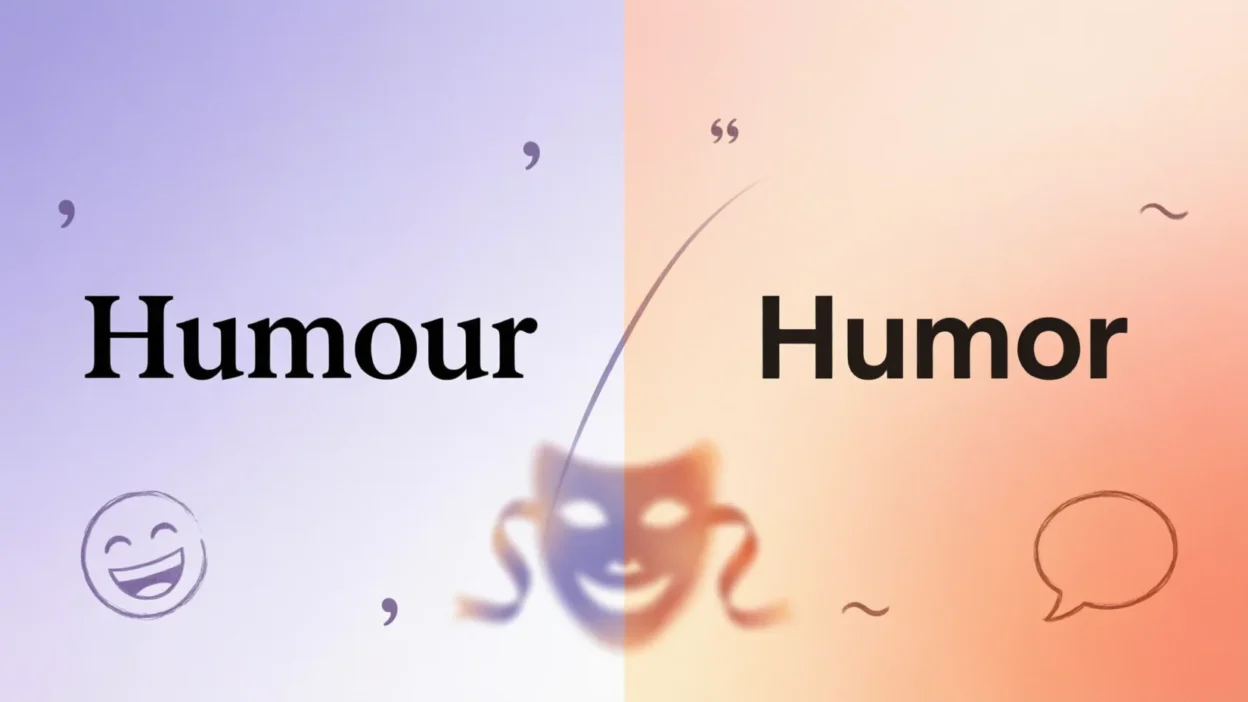
When choosing between humour and humor, both spellings are correct. The difference depends mainly on the variety of English you are using. Humour is the standard spelling in British English, while humor is the standard spelling in American English. They have the same meaning and pronunciation.
This spelling difference can be confusing for students and English learners because both forms appear in books, websites, movies, and everyday conversations.
The same pattern occurs with words such as colour/color and favour/favor. Knowing which form belongs to British or American English helps you write consistently and avoid unnecessary spelling mistakes.
Quick Answer
Humour is the British English spelling, while humor is the American English spelling. Both mean the same thing: the quality of being funny or the ability to appreciate funny situations. Use humour for British English and humor for American English.
Why Do People Confuse “Humour” and “Humor”?
People often confuse these words because they have the same meaning, pronunciation, and grammatical use. The only major difference is their spelling.
The difference comes from different English spelling conventions:
- Humour → British English
- Humor → American English
- Both refer to something funny or amusing.
- Both can describe someone’s ability to make people laugh.
- Neither spelling is incorrect when used in the appropriate English variety.
For example:
Both sentences communicate exactly the same idea.
First Word: Humour
Humour is the traditional spelling used in British English and is also common in other varieties influenced by British English.
It can refer to:
- Something amusing or funny
- The ability to make people laugh
- A person’s ability to recognize funny situations
- A particular style of comedy
Examples
- He has a wonderful sense of humour.
- Her humour made everyone laugh.
- British comedy often uses dry humour.
- I appreciate his unusual humour.
Second Word: Humor
Humor is the standard American English spelling. It has exactly the same meaning as humour.
Examples
- He has a great sense of humor.
- Her humor makes difficult situations easier.
- The movie is full of humor.
- I enjoy his sarcastic humor.
Humour vs Humor: Comparison Table
| Feature | Humour | Humor |
|---|---|---|
| English variety | British English | American English |
| Meaning | Funny quality or amusement | Funny quality or amusement |
| Pronunciation | Same | Same |
| Correct spelling | Yes | Yes |
| Common in the UK | Yes | Less common |
| Common in the US | Less common | Yes |
| Example | sense of humour | sense of humor |
When Should You Use Each?
The easiest rule is to choose the spelling according to your audience and the English variety you are following.
Use “humour” when:
- Writing in British English
- Following UK spelling conventions
- Writing for a British audience
- Using British educational materials
- Maintaining British spelling throughout a document
Example:
Use “humor” when:
- Writing in American English
- Following US spelling conventions
- Writing for an American audience
- Using American textbooks or style conventions
Example:
The most important point is consistency. Avoid switching between British and American spelling without a reason.
10+ Examples of Humour and Humor
Here are examples showing how both spellings work naturally in sentences:
- British: She has a great sense of humour.
- American: She has a great sense of humor.
- British: His humour helped everyone relax.
- American: His humor helped everyone relax.
- British: I enjoy British humour.
- American: I enjoy American humor.
- British: The book contains a lot of dry humour.
- American: The book contains a lot of dry humor.
- British: Her humour is sometimes sarcastic.
- American: Her humor is sometimes sarcastic.
- British: He used humour to make his speech more interesting.
- American: He used humor to make his speech more interesting.
Notice that the meaning does not change. Only the spelling changes.
Common Mistakes
1. Thinking one spelling is always wrong
Neither spelling is universally wrong. Humour is correct in British English, while humor is correct in American English.
2. Mixing spelling styles
A common writing mistake is using British and American spellings randomly in the same piece of writing.
For example, if you use colour, favour, and humour, you are following British spelling. If you use color, favor, and humor, you are following American spelling.
3. Changing the pronunciation
The spelling is different, but the pronunciation is essentially the same in standard English.
4. Assuming the meaning is different
There is no meaningful difference in definition between humour and humor.
Memory Trick
A simple way to remember the difference is:
British = HUMOUR 🇬🇧
American = HUMOR 🇺🇸
Think of the British spelling as keeping the extra “u.”
This same pattern appears in several words:
- colour → color
- favour → favor
- neighbour → neighbor
- honour → honor
- humour → humor
So when you see an extra u, it can often signal British spelling.
American vs British English
British and American English share the same basic vocabulary and grammar, but their spelling conventions sometimes differ.
For this word:
- British English: humour
- American English: humor
Other common examples include:
| British English | American English |
|---|---|
| humour | humor |
| colour | color |
| favour | favor |
| honour | honor |
| behaviour | behavior |
| neighbour | neighbor |
These differences generally do not affect meaning or pronunciation.
Similar Words
Several words are related to humour/humor, but they are not always interchangeable.
Funny
Something that makes people laugh or seems amusing.
Example:
Amusing
Something that causes mild enjoyment or laughter.
Example:
Comedy
A form of entertainment designed to make people laugh.
Example:
Wit
The ability to express clever and often amusing ideas quickly.
Example:
Witicism
A clever or humorous remark.
Example:
Laughter
The physical reaction of laughing.
Example:
Final Verdict
Humour and humor are both correct spellings. The choice depends on the English variety you are using.
Use humour in British English and humor in American English. The meaning, pronunciation, and grammatical function remain the same.
If you are writing for a particular audience, simply follow that audience’s spelling convention and stay consistent throughout your writing.
FAQs:
Is “humour” British or American?
Humour is the standard British English spelling. It is also used in other English varieties that follow British spelling conventions.
Is “humor” British or American?
Humor is the standard American English spelling. American English generally removes the extra u found in the British form.
Do humour and humor mean the same thing?
Yes. Humour and humor have the same meaning. Both can describe something funny, a person’s ability to make people laugh, or the quality of being amusing.
Is “sense of humour” correct?
Yes. Sense of humour is the standard British English form.
Is “sense of humor” correct?
Yes. Sense of humor is the standard American English form.
How do you pronounce humour and humor?
They are pronounced essentially the same way in standard English. The spelling difference does not normally create a difference in pronunciation.
Which spelling should English learners use?
Use the spelling required by the English variety you are learning or the audience you are writing for. If you are studying British English, use humour; if you are studying American English, use humor.
Are colour and humor related spelling differences?
Yes. They follow a similar British-American spelling pattern. British English uses colour and humour, while American English uses color and humor.
Remember This
Humour = British English 🇬🇧
Humor = American English 🇺🇸
Both are correct. Both have the same meaning. The key is to choose the spelling that matches your preferred variety of English and use it consistently.
The easiest memory rule is: British English keeps the “u”; American English usually drops it.
Conclusion
The difference between humour and humor is a spelling difference, not a difference in meaning. Humour is used in British English, while humor is used in American English. Both words describe amusement, comedy, or the ability to recognize and create something funny.
For English learners, the most useful approach is to focus on consistency. If your writing follows British English, choose humour. If it follows American English, choose humor. Once you remember this simple distinction, you can confidently use the correct form in essays, assignments, emails, and everyday writing.

Evelyn Mia is a passionate language writer and vocabulary enthusiast at Synomity.com, specializing in synonyms, word meanings, and language learning. She creates informative content that helps readers expand vocabulary and communicate more effectively.