
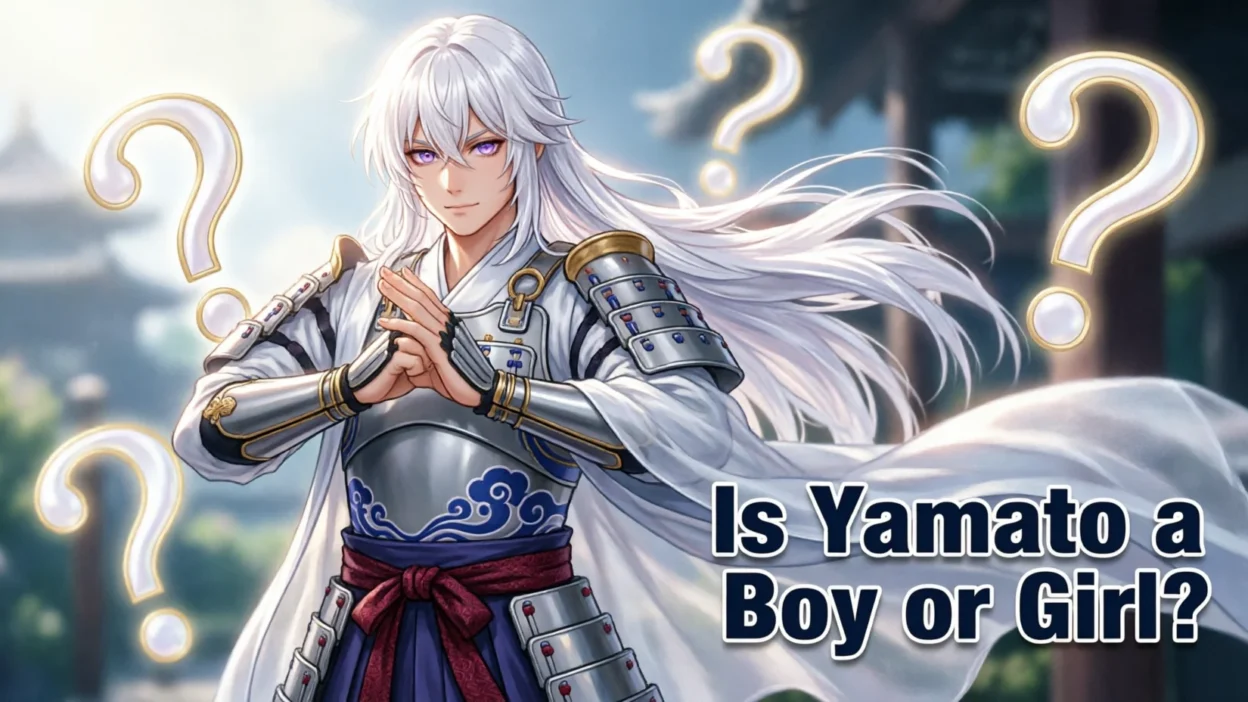
If you are wondering “Is Yamato a boy or girl?”, the answer depends on whether you mean Yamato’s sex at birth or the gender identity presented in the story. In One Piece, Yamato is Kaido’s child and repeatedly identifies with Kozuki Oden, a man.
Kaido and other characters also use masculine language for Yamato in important parts of the Wano story. Official One Piece merchandise and promotional material, however, has sometimes categorized Yamato alongside female characters, which is one reason the subject remains confusing. (One Piece)
The safest way to understand Yamato is to separate biological sex, gender identity, character dialogue, and official merchandising categories rather than treating every source as saying exactly the same thing. Yamato calls themself Oden and is referred to as Kaido’s “son” in official One Piece material, while other official products use female-oriented categories. (One Piece)
Quick Answer
Yamato is a female character who identifies with and presents themself as Kozuki Oden, a man, in One Piece. The story uses masculine references for Yamato, including “son,” while some official merchandise has also categorized Yamato with female characters. This difference between story context and merchandise terminology causes much of the confusion. (One Piece)
Why Do People Confuse Yamato’s Gender?
The confusion comes from several parts of Yamato’s character and the way different official materials describe them.
Yamato:
- Is Kaido’s child.
- Admirés Kozuki Oden intensely.
- Says they are Oden.
- Is described as Kaido’s son in some official One Piece material.
- Is referred to with masculine language in the story.
- Appears in some official products aimed at or categorized with female characters. (One Piece)
This means a reader can encounter apparently different descriptions depending on the source.
Does Yamato Call Themself Oden?
Yes. Yamato’s identification with Kozuki Oden is a central part of the character. Official One Piece.com material describes Yamato as Kaido’s son who calls themself Kozuki Oden and fights for Wano. (One Piece)
First Word: “Yamato”
Yamato is the character’s personal name.
In One Piece, Yamato is a major character connected to Kaido and the Wano Country storyline. Yamato was introduced during the Wano arc and became closely connected with Luffy, Oden’s legacy, and the struggle against Kaido.
The official One Piece.com site lists Yamato as part of the Wano Country story and gives the character’s birthday as November 3. (One Piece)
Second Word: “Oden”
Oden refers to Kozuki Oden, a male samurai from Wano and one of the most important figures in Yamato’s story.
Yamato admires Oden so strongly that they adopt his name and ideals. This is why the character may be called “Oden” or described using masculine terms.
Official One Piece.com merchandise descriptions explicitly say that Yamato calls themself Kozuki Oden. (One Piece)
Yamato: Boy or Girl? Comparison Table
| Point | What the story/materials show |
|---|---|
| Character | Yamato |
| Series | One Piece |
| Parent | Kaido |
| Yamato’s admired figure | Kozuki Oden |
| Yamato’s self-identification | Oden |
| Masculine references | Yes, including “son” in official material |
| Female-oriented official categories | Also appear in some merchandise |
| Main source of confusion | Different contexts and descriptions |
The important point is that not every official source uses the same terminology. For example, one official One Piece.com product description calls Yamato Kaido’s son, while another official product belongs to the “ONE PIECE GIRL’S COLLECTION.” (One Piece)
When Should You Use “Boy,” “Girl,” “He,” or “She”?
If you are discussing Yamato, context matters.
When explaining the character’s story
You can say:
This is more precise than simply saying “Yamato is a boy” or “Yamato is a girl.”
When discussing biological sex
You may encounter sources describing Yamato as female. This terminology is also reflected in some official merchandise classifications. (One Piece)
When discussing Yamato’s identity in the story
Masculine language is important because Yamato explicitly identifies with Oden, and official One Piece material has called Yamato Kaido’s son. (One Piece)
10+ Examples About Yamato
- Yamato is a major character in One Piece.
- Yamato is Kaido’s child.
- Yamato strongly admires Kozuki Oden.
- Yamato calls themself Oden.
- Yamato wants to follow Oden’s ideals.
- Some official material refers to Yamato as Kaido’s son. (One Piece)
- Yamato fights against Kaido’s plans for Wano.
- Yamato appears throughout the Wano Country storyline.
- Some official merchandise places Yamato in female-oriented collections. (One Piece)
- Yamato uses masculine presentation and language in important story contexts.
- Yamato’s connection with Oden explains much of the character’s identity.
- The different descriptions are why fans continue to ask about Yamato’s gender.
Common Mistakes
1. Saying there is no ambiguity at all
Different official materials use different terminology. Ignoring that can make an explanation incomplete.
2. Treating “son of Kaido” as the only information
The phrase is important, but Yamato’s identification with Oden and the broader story context matter too.
3. Treating merchandise categories as the complete story
A product category does not necessarily explain every aspect of a fictional character.
4. Confusing Oden with Yamato
Yamato is not literally Kozuki Oden. Yamato identifies with and takes inspiration from Oden.
5. Assuming appearance determines the answer
Yamato’s appearance alone does not explain the character’s identity or the terminology used in the story.
Memory Trick
Remember:
Yamato → Oden → masculine identity in the story → Kaido’s “son.”
But also remember:
Official merchandise does not always use the same classification.
This simple distinction helps explain why you may see both masculine and female-related descriptions of Yamato.
American vs British English
There is no important American-versus-British spelling difference in the name Yamato.
Both American and British English use:
- Yamato
- Kozuki Oden
- Kaido
- One Piece
The bigger difference is not spelling but word choice when describing Yamato.
For example:
- US English: “Is Yamato a boy or girl?”
- UK English: “Is Yamato a boy or a girl?”
Both questions communicate essentially the same meaning.
Similar Words and Terms
Understanding these terms makes the discussion easier:
Sex
A term generally used for biological characteristics.
Gender
A term that can refer to a person’s social or personal identity.
Pronouns
Words such as he, she, and they used instead of a person’s name.
Identity
How someone understands or presents who they are.
Character classification
A category assigned to a fictional character by a publisher, merchandise maker, database, or other source.
These concepts should not automatically be treated as interchangeable.
Final Verdict
The clearest answer is that Yamato is a female character who identifies with Kozuki Oden and is presented with masculine identity and references in important parts of the One Piece story. Official One Piece.com material has described Yamato as Kaido’s son and as someone who calls themself Kozuki Oden. (One Piece)
At the same time, some official merchandise has placed Yamato in female-oriented collections, showing why simply looking at one official label can produce a different answer. (One Piece)
FAQs:
Is Yamato a boy or girl in One Piece?
Yamato is a female character who identifies with Kozuki Oden, a male character. The story uses masculine references for Yamato, while some official merchandise uses female-oriented classifications. (One Piece)
Is Yamato Kaido’s son or daughter?
Official One Piece material has referred to Yamato as Kaido’s son, while other official products categorize Yamato with female characters. This difference is part of the reason discussions about Yamato can be confusing. (One Piece)
Why does Yamato call themself Oden?
Yamato greatly admires Kozuki Oden and wants to follow Oden’s ideals and legacy. Yamato therefore adopts the name and identity of Oden within the story. (One Piece)
Is Kozuki Oden a boy?
Yes. Kozuki Oden is a male samurai and an important historical figure within the world of One Piece.
What pronouns are used for Yamato?
Masculine references are used for Yamato in important parts of the story and official material, including the description of Yamato as Kaido’s son. (One Piece)
Why do some official sources call Yamato female?
Different official products and categories can describe or group characters differently. For example, Yamato appeared in an official ONE PIECE GIRL’S COLLECTION product. (One Piece)
Is Yamato actually Kozuki Oden?
No. Yamato is not literally Oden. Yamato admires Oden and identifies with him, adopting his name and ideals.
Remember This
Yamato is Kaido’s child, strongly identifies with Kozuki Oden, and is referred to with masculine language in major story contexts. Some official merchandise, however, uses female-oriented classifications. That is the key reason the “boy or girl” question can have different-looking answers depending on the source. (One Piece)
Conclusion
The question “Is Yamato a boy or girl?” is more complicated than a simple one-word answer. In One Piece, Yamato’s character is deeply connected to Kozuki Oden and the desire to carry on Oden’s identity and ideals. Official material has used masculine descriptions such as “son of Kaido,” while other official merchandise has grouped Yamato with female characters. (One Piece)
For the most accurate explanation, it is useful to mention both the character’s story identity and the differing official classifications. This avoids reducing Yamato to a single label and explains why readers may encounter seemingly contradictory information when searching for the answer.

Lucas Smith is a skilled language writer at Synomity.com, passionate about synonyms, vocabulary enrichment, and word meanings. He develops engaging content that helps readers strengthen communication skills and expand their understanding of language.