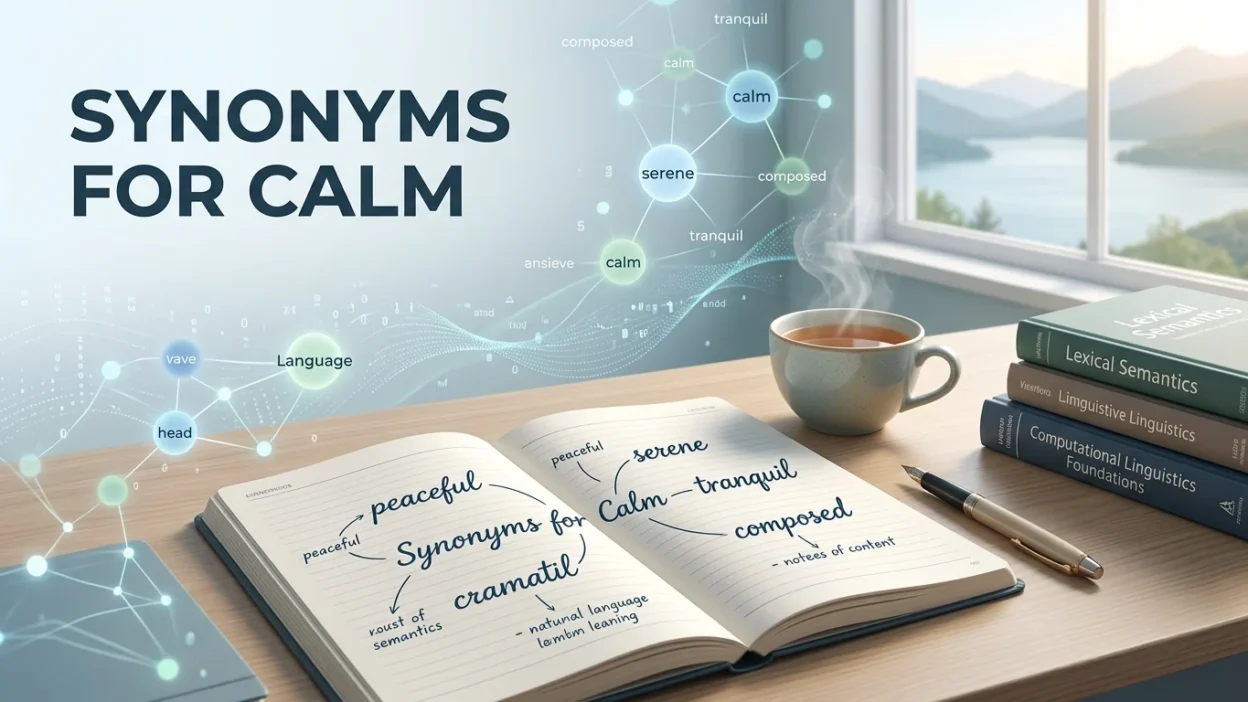
Learning synonyms for calm improves effective communication by strengthening vocabulary and deepening understanding of how language works beneath the surface. I have often found that studying the Conference on Computational Natural Language Learning, known as CoNLL-2005, offers an unexpected lesson in precision and expression. This ninth event in a respected series of academic meetings brought together experts in natural language learning through SIGNLL, an ACL special interest group. Held in 2005 alongside the ACL 2005 conference, the gathering in Ann Arbor, Michigan, on June 29 and June 30 created an environment where ideas could be shared with thoughtful attention and calm precision.
What stood out to me was how the conference welcomed submissions exploring deeper linguistic phenomena. This theme guided the shared task and encouraged participants to look beyond surface meanings. For learners exploring calmness and related expressions, context plays a vital role in understanding subtle differences. The invited speakers, Mark Johnson and Mark Steedman, offered valuable perspectives that enriched discussions around language understanding and interpretation, reminding us that word choice shapes meaning.
An equally fascinating memorable part of the program was the joint session linked to the Workshop on Psychocomputational Models of Human Language Acquisition, organized by William Sakas. The emphasis on psychocomputational models and language acquisition showed how people recognize tone, intent, and emotional nuance over time. Through my own work in vocabulary development, I have seen how these processes help learners select the right synonym and communicate with greater clarity and confidence.
What Does “Calm” Mean?
Simple Meaning of Calm
The word calm means being free from anger, stress, excitement, or strong emotions. It can describe a person’s feelings, behavior, voice, thoughts, or even a peaceful place.
Tone and Usage Context
“Calm” usually has a positive and reassuring tone. It is commonly used when describing:
- Peaceful emotions
- Controlled behavior
- Quiet surroundings
- Relaxed communication
- Stable situations
For example:
Example: Despite the emergency, the teacher remained calm and guided everyone safely.
30 Synonyms for Calm
1. Peaceful
Meaning: Free from conflict, noise, or worry.
Example: They enjoyed a peaceful evening by the lake.
Best Usage Context: Describing quiet places or harmonious situations.
2. Serene
Meaning: Very peaceful and untroubled.
Example: Her serene smile comforted everyone.
Best Usage Context: Formal writing and descriptions of beauty.
3. Tranquil
Meaning: Quiet and undisturbed.
Example: The garden looked tranquil after the rain.
Best Usage Context: Nature and relaxing environments.
4. Relaxed
Meaning: Free from tension or anxiety.
Example: He appeared relaxed during the interview.
Best Usage Context: Everyday conversations.
5. Composed
Meaning: Showing emotional control.
Example: She remained composed under pressure.
Best Usage Context: Professional and stressful situations.
6. Collected
Meaning: Calm and organized in thought.
Example: Try to stay collected before speaking.
Best Usage Context: Emotional self-control.
7. Unruffled
Meaning: Not easily upset.
Example: He stayed unruffled despite criticism.
Best Usage Context: Formal descriptions of personality.
8. Placid
Meaning: Peaceful and not easily disturbed.
Example: The placid river reflected the sunset.
Best Usage Context: Literary descriptions.
9. Still
Meaning: Quiet and without movement.
Example: The room became still during the speech.
Best Usage Context: Physical silence.
10. Quiet
Meaning: Making little noise; peaceful.
Example: We spent a quiet afternoon reading.
Best Usage Context: Daily conversations.
11. Gentle
Meaning: Kind, mild, and calm.
Example: Her gentle voice soothed the child.
Best Usage Context: Describing behavior.
12. Cool
Meaning: Calm under pressure.
Example: Stay cool during the exam.
Best Usage Context: Informal situations.
13. Level-headed
Meaning: Sensible and calm.
Example: She made a level-headed decision.
Best Usage Context: Decision-making situations.
14. Self-controlled
Meaning: Able to manage emotions.
Example: He remained self-controlled throughout the debate.
Best Usage Context: Emotional discipline.
15. Poised
Meaning: Gracefully calm and confident.
Example: The speaker looked poised on stage.
Best Usage Context: Professional settings.
16. Restful
Meaning: Providing relaxation.
Example: The vacation was restful and refreshing.
Best Usage Context: Describing experiences.
17. Undisturbed
Meaning: Left peaceful and uninterrupted.
Example: She slept undisturbed all night.
Best Usage Context: Quiet environments.
18. Balanced
Meaning: Emotionally stable.
Example: He has a balanced approach to problems.
Best Usage Context: Personality traits.
19. Stable
Meaning: Steady and consistent.
Example: The team remained stable during challenges.
Best Usage Context: Emotional and situational contexts.
20. Easygoing
Meaning: Relaxed and not easily worried.
Example: My neighbor is easygoing and friendly.
Best Usage Context: Informal personality descriptions.
21. Mellow
Meaning: Relaxed and pleasant.
Example: The music created a mellow atmosphere.
Best Usage Context: Casual descriptions.
22. Untroubled
Meaning: Free from worry.
Example: The child looked untroubled and happy.
Best Usage Context: Emotional states.
23. Reassuring
Meaning: Creating feelings of calm.
Example: Her reassuring words helped me relax.
Best Usage Context: Supportive communication.
24. Moderate
Meaning: Avoiding extremes.
Example: He expressed his views in a moderate tone.
Best Usage Context: Discussions and opinions.
25. Controlled
Meaning: Carefully managed.
Example: She gave a controlled response.
Best Usage Context: Formal communication.
26. Patient
Meaning: Able to wait calmly.
Example: The patient teacher answered every question.
Best Usage Context: Interpersonal situations.
27. Tolerant
Meaning: Accepting and calm toward differences.
Example: A tolerant attitude reduces conflict.
Best Usage Context: Social interactions.
28. Soothing
Meaning: Having a calming effect.
Example: The soothing music helped me sleep.
Best Usage Context: Sensory experiences.
29. Comforting
Meaning: Making someone feel less anxious.
Example: His comforting presence eased my fears.
Best Usage Context: Emotional support.
30. Equable
Meaning: Consistently calm and even-tempered.
Example: She is known for her equable nature.
Best Usage Context: Formal and advanced writing.
Comparison Guide: When to Use Different Synonyms
| Synonym | Best For | Tone |
|---|---|---|
| Peaceful | Places and situations | Neutral |
| Relaxed | Everyday conversations | Casual |
| Serene | Beautiful descriptions | Elegant |
| Composed | Stressful situations | Professional |
| Cool | Pressure and challenges | Informal |
| Gentle | Behavior and speech | Warm |
| Level-headed | Decision-making | Practical |
| Poised | Public appearances | Sophisticated |
| Soothing | Comfort and relaxation | Supportive |
| Equable | Personality descriptions | Formal |
How to Choose the Right Synonym
For Peaceful Places
Use words like:
- Peaceful
- Tranquil
- Serene
- Placid
- Quiet
These create images of calm environments.
For Emotional Control
Choose:
- Composed
- Collected
- Self-controlled
- Level-headed
- Controlled
These emphasize staying calm during difficult situations.
For Friendly Personalities
Consider:
- Gentle
- Easygoing
- Patient
- Balanced
- Equable
These describe calm character traits.
For Providing Comfort
Use:
- Soothing
- Comforting
- Reassuring
- Restful
- Mellow
These focus on creating feelings of relaxation.
For Informal Conversations
Common choices include:
- Relaxed
- Cool
- Easygoing
- Quiet
- Mellow
These sound natural in daily English.
Why Learning Synonyms for Calm Matters
Knowing multiple synonyms for calm improves vocabulary flexibility and communication skills. Writers can avoid repetition, students can strengthen essays, and ESL learners can express emotions more accurately.
It also helps readers understand subtle differences in meaning. A person who is “composed” during a crisis is not exactly the same as someone who is simply “relaxed.” These distinctions make language richer and more precise.
Conclusion
Exploring different synonyms for calm allows you to communicate with greater confidence and clarity. While all these words share the idea of peace and emotional steadiness, each carries its own tone and usage context. Some are ideal for describing people, others work best for places, emotions, or supportive situations.
By understanding the meanings, examples, and contexts of these 30 synonyms, you can choose the right word for every situation. Continue practicing these terms in your writing and conversations, and your English vocabulary will become more natural, expressive, and effective.

Lucas Smith is a skilled language writer at Synomity.com, passionate about synonyms, vocabulary enrichment, and word meanings. He develops engaging content that helps readers strengthen communication skills and expand their understanding of language.