
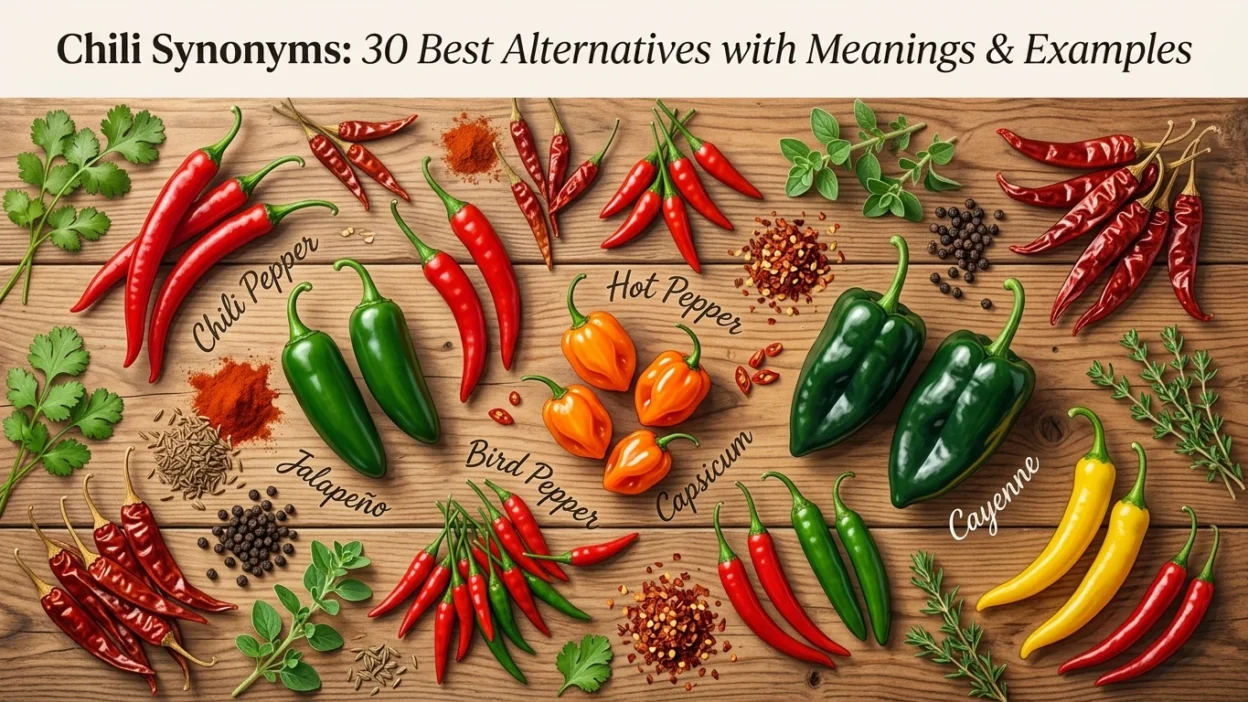
The phrase chili synonyms helps people discover different words used to describe chili peppers, spicy peppers, or similar ingredients in cooking and everyday language. Whether you’re writing a recipe, studying English, creating food content, or expanding your vocabulary, knowing these alternatives makes your writing more natural and varied.
Although chili is the most common term in many countries, different regions use different names depending on the type of pepper, its heat level, and local language. Some words are general, while others refer to specific varieties. Learning these differences helps students, ESL learners, writers, and content creators communicate more accurately.
What Does “Chili” Mean?
Simple Meaning
A chili is a spicy fruit from the Capsicum family. It is commonly used as a vegetable or spice in cooking to add heat, flavor, and color to food.
Tone and Usage Context
The word chili is commonly used in:
- Everyday conversations
- Recipes and cookbooks
- Food blogs
- Restaurant menus
- Gardening guides
- Agricultural discussions
Depending on the country, people may also say chili pepper, hot pepper, or simply pepper.
30 Chili Synonyms with Meanings, Examples, and Best Usage
1. Chili Pepper
Meaning: The full name for a spicy chili.
Example: Add one chopped chili pepper to the soup.
Best Usage: General cooking and recipes.
2. Hot Pepper
Meaning: Any pepper with noticeable heat.
Example: She loves eating hot peppers with pizza.
Best Usage: Everyday English.
3. Capsicum
Meaning: The botanical name for peppers.
Example: Capsicum plants grow well in warm climates.
Best Usage: Scientific and gardening writing.
4. Red Pepper
Meaning: A ripe red chili or pepper.
Example: Sprinkle crushed red pepper on pasta.
Best Usage: Cooking and recipes.
5. Green Chili
Meaning: An unripe green spicy pepper.
Example: Fresh green chilies make the curry hotter.
Best Usage: Asian cuisine.
6. Pepper
Meaning: A general term for peppers.
Example: This pepper has a spicy flavor.
Best Usage: Casual conversation.
7. Cayenne Pepper
Meaning: A thin, very hot chili variety.
Example: Add a pinch of cayenne pepper.
Best Usage: Recipes and spice discussions.
8. Jalapeño
Meaning: A medium-hot Mexican chili.
Example: He topped the burger with sliced jalapeños.
Best Usage: Mexican cuisine.
9. Serrano Pepper
Meaning: A hotter pepper than a jalapeño.
Example: Serrano peppers add fresh heat to salsa.
Best Usage: Authentic Mexican dishes.
10. Habanero
Meaning: A very spicy orange or red chili.
Example: The sauce contains habanero peppers.
Best Usage: Extra-hot recipes.
11. Bird’s Eye Chili
Meaning: A small but extremely hot chili.
Example: Thai dishes often use bird’s eye chilies.
Best Usage: Southeast Asian cooking.
12. Thai Chili
Meaning: A popular hot chili used in Thai food.
Example: Add two Thai chilies for extra spice.
Best Usage: Thai cuisine.
13. Poblano
Meaning: A mild Mexican chili.
Example: Stuff the poblano with cheese.
Best Usage: Mexican recipes.
14. Anaheim Pepper
Meaning: A mild green chili variety.
Example: Roast an Anaheim pepper before serving.
Best Usage: Mild dishes.
15. Fresno Pepper
Meaning: A medium-hot red pepper.
Example: Fresh Fresno peppers brighten the salsa.
Best Usage: Fresh recipes.
16. Banana Pepper
Meaning: A long, mildly spicy yellow pepper.
Example: Add banana peppers to the sandwich.
Best Usage: Salads and sandwiches.
17. Cherry Pepper
Meaning: A small round pepper with mild heat.
Example: Pickled cherry peppers taste delicious.
Best Usage: Pickling.
18. Scotch Bonnet
Meaning: A very hot Caribbean chili.
Example: Caribbean sauces often use Scotch bonnet peppers.
Best Usage: Caribbean cuisine.
19. Ghost Pepper
Meaning: One of the world’s hottest peppers.
Example: Only a tiny piece of ghost pepper is needed.
Best Usage: Extreme spice discussions.
20. Carolina Reaper
Meaning: An extremely hot chili variety.
Example: The challenge featured a Carolina Reaper.
Best Usage: Hot pepper competitions.
21. Chili Pod
Meaning: The fruit of a chili plant.
Example: Dry each chili pod in the sun.
Best Usage: Gardening and agriculture.
22. Spicy Pepper
Meaning: Any pepper that has heat.
Example: Use a spicy pepper if you enjoy hot food.
Best Usage: Beginner-friendly writing.
23. Fire Pepper
Meaning: An informal name for a very hot chili.
Example: That fire pepper made the soup intense.
Best Usage: Casual descriptions.
24. Fiery Pepper
Meaning: A pepper with strong heat.
Example: The chef chose a fiery pepper.
Best Usage: Food blogs.
25. Heat Pepper
Meaning: An informal way to describe hot peppers.
Example: This heat pepper is stronger than expected.
Best Usage: Informal writing.
26. Spice Pepper
Meaning: A pepper mainly used to add spice.
Example: The recipe recommends one spice pepper.
Best Usage: Simple explanations.
27. Pepper Pod
Meaning: Another name for a pepper fruit.
Example: Harvest each pepper pod carefully.
Best Usage: Gardening.
28. Hot Chili
Meaning: A chili with strong heat.
Example: This hot chili is perfect for spicy noodles.
Best Usage: Everyday cooking.
29. Fresh Chili
Meaning: A recently harvested chili.
Example: Fresh chilies taste brighter than dried ones.
Best Usage: Recipes and cooking.
30. Dried Chili
Meaning: A chili that has been dried for storage.
Example: Crush a dried chili into the sauce.
Best Usage: Spice blends and traditional recipes.
Comparison Guide: When to Use Different Chili Synonyms
Comparison Table
| Word | Heat Level | Best Used In | Common Situation |
|---|---|---|---|
| Chili Pepper | Any | Recipes | General use |
| Hot Pepper | Medium–High | Conversation | Everyday English |
| Capsicum | Any | Science | Botanical writing |
| Jalapeño | Medium | Mexican food | Recipes |
| Serrano | High | Salsa | Authentic cooking |
| Habanero | Very High | Hot sauces | Spicy dishes |
| Bird’s Eye Chili | Very High | Thai food | Asian cuisine |
| Poblano | Mild | Stuffed peppers | Mexican recipes |
| Banana Pepper | Mild | Sandwiches | Salads |
| Ghost Pepper | Extreme | Spice challenges | Food competitions |
| Carolina Reaper | Extreme | Hot sauces | Extreme heat |
How to Choose the Right Chili Synonym
For Everyday Conversation
Use:
- Chili
- Chili Pepper
- Hot Pepper
- Pepper
These are easy for almost everyone to understand.
For Recipes
Choose:
- Jalapeño
- Cayenne Pepper
- Serrano
- Poblano
- Anaheim Pepper
- Thai Chili
These names tell readers exactly which pepper to use.
For Scientific or Gardening Writing
Use:
- Capsicum
- Chili Pod
- Pepper Pod
These are more accurate in botanical contexts.
For Describing Very Spicy Food
Choose:
- Ghost Pepper
- Carolina Reaper
- Habanero
- Bird’s Eye Chili
- Scotch Bonnet
These emphasize intense heat.
For Simple ESL Writing
Stick with:
- Chili
- Chili Pepper
- Hot Pepper
- Fresh Chili
- Dried Chili
These are clear, common, and easy to remember.
Common Mistakes When Using Chili Synonyms
Confusing Chili and Bell Pepper
Bell peppers belong to the same family but are not spicy, while chilies contain varying levels of heat.
Using Pepper Too Generally
The word pepper can refer to sweet peppers, hot peppers, or even black pepper. Be specific when clarity matters.
Mixing Up Pepper Varieties
Jalapeños, habaneros, and poblanos all differ in flavor and heat. Choose the correct variety for recipes and food writing.
Tips for Writers and ESL Learners
Improve Your Vocabulary Naturally
Instead of repeating chili, alternate with appropriate terms like chili pepper, jalapeño, cayenne pepper, or hot pepper depending on the context.
Match the Context
Use scientific names in educational writing, specific pepper names in recipes, and general terms in casual conversations.
Think About Your Audience
If your readers are beginners, use familiar words. If they’re food enthusiasts, specific pepper varieties provide more accurate and engaging descriptions.
Conclusion
Learning chili synonyms helps you write more clearly, accurately, and naturally. While chili remains the most widely understood term, alternatives like chili pepper, hot pepper, jalapeño, cayenne pepper, habanero, and Capsicum each fit different situations. By choosing the right synonym for your audience and purpose, you can improve recipes, articles, school assignments, and creative writing while expanding your English vocabulary.

John Morrison is a dedicated content writer at Synomity.com, focused on synonyms, vocabulary development, and word meanings. He creates clear, educational resources that help readers improve language skills and communicate with confidence.