The phrase “as a result” is one of the most commonly used transition expressions in English. It connects two ideas by showing that one event happened because of another.
Whether you are writing an essay, an email, a report, or a blog post, knowing different as a result synonyms can make your writing smoother, more engaging, and less repetitive.
Expanding your vocabulary is an excellent way to become a better communicator. Students, ESL learners, writers, and content creators often need a variety of transition words to make their writing clear and professional. Learning alternatives to “as a result” allows you to express cause and effect more naturally while matching the tone of your writing.
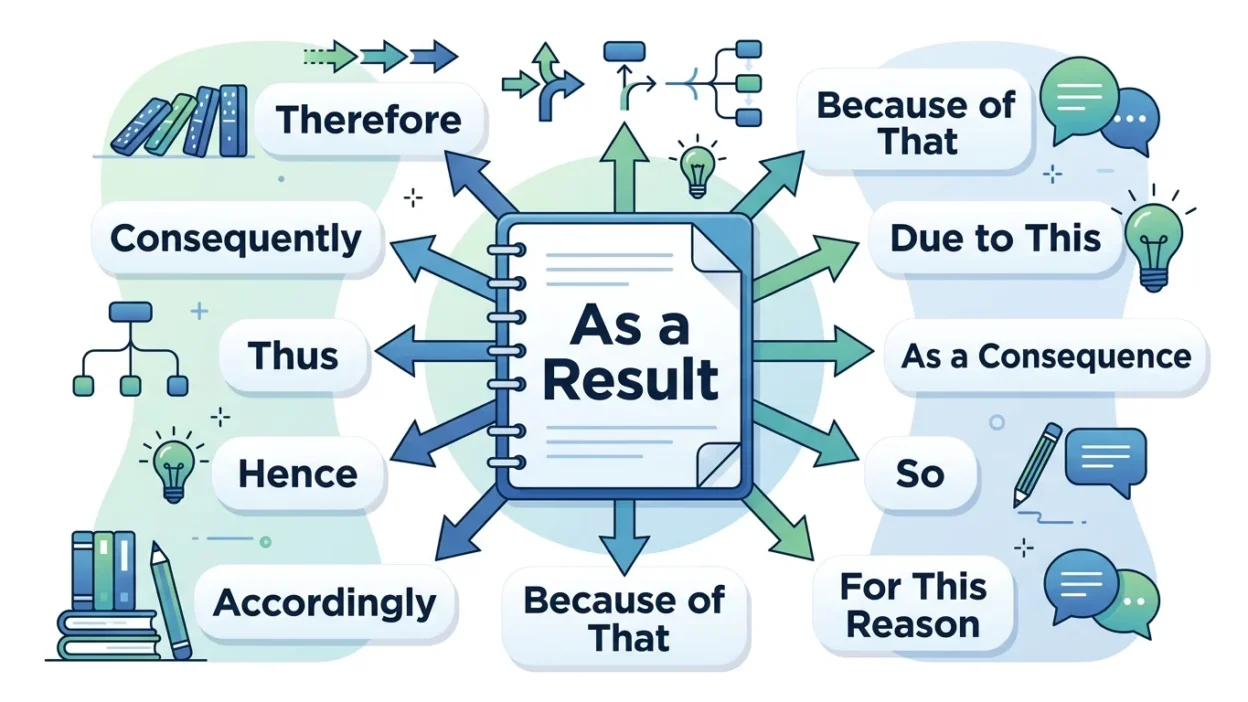
In this article, you’ll learn the simple meaning of “as a result,” discover 30 useful synonyms, see practical examples, understand where each synonym works best, and find tips for choosing the right word in different situations.
What Does “As a Result” Mean?
Simple Meaning
“As a result” means because something happened, therefore, or as a consequence. It introduces the outcome or effect of a previous action, event, or situation.
Tone
The phrase has a neutral tone. It works well in both formal and informal writing, making it one of the most versatile transition expressions in English.
Usage Context
Use “as a result” whenever you want to explain the consequence of something.
Example:
The weather became colder. As a result, many people stayed indoors.
30 As a Result Synonyms
1. Therefore
Meaning: For that reason.
Example: The roads were flooded; therefore, the school remained closed.
Best Usage Context: Academic writing, reports, and formal communication.
2. Consequently
Meaning: Because of what happened earlier.
Example: She forgot her passport. Consequently, she missed her flight.
Best Usage Context: Professional and formal writing.
3. Thus
Meaning: In this way or because of that.
Example: The company reduced expenses, thus increasing profits.
Best Usage Context: Essays and academic papers.
4. Hence
Meaning: For this reason.
Example: He worked hard; hence, he received a promotion.
Best Usage Context: Business and academic writing.
5. Accordingly
Meaning: In a way that fits the situation.
Example: Demand increased, and production was expanded accordingly.
Best Usage Context: Business reports and official documents.
6. Because of That
Meaning: Due to the previous reason.
Example: It rained all morning. Because of that, the picnic was canceled.
Best Usage Context: Everyday conversation.
7. Due to This
Meaning: As a consequence of this.
Example: The computer crashed. Due to this, some files were lost.
Best Usage Context: Formal writing.
8. For This Reason
Meaning: Because of the stated cause.
Example: She enjoys helping others. For this reason, she became a nurse.
Best Usage Context: Essays and presentations.
9. As a Consequence
Meaning: As an effect.
Example: He ignored the instructions. As a consequence, the machine stopped working.
Best Usage Context: Formal writing.
10. So
Meaning: Because of that.
Example: I was tired, so I went to bed early.
Best Usage Context: Daily conversation and informal writing.
11. Then
Meaning: After that happened.
Example: The lights went out. Then everyone used their phones as flashlights.
Best Usage Context: Storytelling.
12. Thereby
Meaning: By doing that.
Example: She improved customer service, thereby increasing customer satisfaction.
Best Usage Context: Legal and professional writing.
13. Whereupon
Meaning: Immediately after that.
Example: The manager announced the decision, whereupon the meeting ended.
Best Usage Context: Literary and formal writing.
14. Ergo
Meaning: Therefore.
Example: The facts are clear; ergo, the conclusion is obvious.
Best Usage Context: Formal or humorous writing.
15. Subsequently
Meaning: Afterward as a consequence.
Example: He accepted the offer and subsequently moved to another city.
Best Usage Context: Reports and timelines.
16. Which Led To
Meaning: Caused another event.
Example: Heavy traffic occurred, which led to long delays.
Best Usage Context: General writing.
17. This Caused
Meaning: Produced a particular effect.
Example: The server failed. This caused the website to go offline.
Best Usage Context: Simple explanations.
18. This Meant
Meaning: Had the effect of.
Example: Sales increased significantly. This meant higher profits.
Best Usage Context: Business and educational writing.
19. In Consequence
Meaning: As an outcome.
Example: He ignored the warning. In consequence, he faced penalties.
Best Usage Context: Formal English.
20. By Doing So
Meaning: Because of that action.
Example: She exercised every morning. By doing so, she improved her health.
Best Usage Context: Advice and instructional writing.
21. On That Account
Meaning: For that reason.
Example: He was dependable. On that account, everyone trusted him.
Best Usage Context: Formal communication.
22. In Turn
Meaning: Leading to another effect.
Example: Better education creates more opportunities, which in turn improves living standards.
Best Usage Context: Cause-and-effect discussions.
23. Which Resulted In
Meaning: Produced a particular outcome.
Example: They invested wisely, which resulted in strong business growth.
Best Usage Context: Reports and articles.
24. Following This
Meaning: After this happened.
Example: The presentation ended. Following this, the audience asked questions.
Best Usage Context: Sequential writing.
25. Because
Meaning: Since.
Example: We stayed home because it was raining heavily.
Best Usage Context: Everyday English.
26. Owing to This
Meaning: Due to this reason.
Example: Equipment failed unexpectedly. Owing to this, production stopped for several hours.
Best Usage Context: Official documents.
27. In Light of This
Meaning: Considering this information.
Example: Customer feedback declined. In light of this, the company improved its services.
Best Usage Context: Business writing.
28. Thanks to This
Meaning: Because of something positive.
Example: She practiced every day. Thanks to this, she won the championship.
Best Usage Context: Positive outcomes.
29. As Such
Meaning: Therefore based on what has been said.
Example: The device is fragile. As such, it should be handled carefully.
Best Usage Context: Professional writing.
30. Resultingly
Meaning: As a result.
Example: Costs increased dramatically, resultingly reducing profits.
Best Usage Context: Rare and technical writing.
Comparison Guide: When to Use Different As a Result Synonyms
Formal Writing
| Synonym | Best Used In |
|---|---|
| Therefore | Academic essays |
| Consequently | Reports |
| Thus | Research papers |
| Hence | Professional documents |
| Accordingly | Business writing |
| In Consequence | Formal English |
| Owing to This | Official communication |
Everyday Conversation
| Synonym | Best Used In |
|---|---|
| So | Casual speech |
| Because of That | Informal writing |
| This Caused | Simple explanations |
| This Meant | Everyday communication |
| Following This | Storytelling |
Positive Outcomes
| Synonym | Best Used In |
|---|---|
| Thanks to This | Success stories |
| By Doing So | Advice |
| Which Resulted In | Achievements |
| In Turn | Cause-and-effect writing |
How to Choose the Right Synonym
For Academic Writing
If you are writing essays, research papers, or assignments, choose words like therefore, thus, consequently, hence, and accordingly. These sound professional and are widely accepted in formal writing.
For Everyday English
When speaking with friends or writing casually, use so, because of that, this caused, or this meant. These expressions are easy to understand and sound natural.
For Business and Professional Writing
Business reports, emails, and presentations often use accordingly, therefore, consequently, in light of this, and which resulted in because they create a polished tone.
For Positive Results
When discussing achievements or benefits, expressions like thanks to this, by doing so, which resulted in, and in turn highlight positive outcomes effectively.
For Storytelling
If you are writing stories or describing events, then, following this, subsequently, and which led to help create a smooth flow between events.
Common Mistakes to Avoid
Repeating “As a Result”
Using the same phrase several times in one piece of writing can make your content sound repetitive. Mix in suitable synonyms to keep your writing interesting.
Using Formal Words in Casual Conversations
Words such as ergo, whereupon, and thereby may sound unnatural in everyday speech. Save them for formal or literary writing.
Choosing the Wrong Context
Not every synonym fits every situation. Consider whether your writing is formal, informal, academic, or conversational before selecting an alternative.
Tips to Improve Your Vocabulary
Read Different Types of Content
Books, newspapers, blogs, and magazines expose you to a wide variety of transition words and phrases.
Practice Rewriting Sentences
Replace “as a result” with different synonyms to understand how each one changes the tone.
Learn Through Examples
Reading words in complete sentences makes them easier to remember than memorizing definitions alone.
Match the Tone
Always choose a synonym that fits your audience. Formal writing needs formal transitions, while casual writing sounds better with simple alternatives.
Conclusion
Learning as a result synonyms is a simple but effective way to improve your English vocabulary and writing skills. While “as a result” is a useful phrase, using alternatives such as therefore, consequently, thus, hence, accordingly, and so helps your writing become more varied, natural, and engaging.
Whether you’re writing essays, creating blog posts, preparing reports, or simply improving your English, knowing these alternatives allows you to express cause and effect more clearly. Practice using these synonyms in different situations, and you’ll soon write with greater confidence and flexibility.

John Morrison is a dedicated content writer at Synomity.com, focused on synonyms, vocabulary development, and word meanings. He creates clear, educational resources that help readers improve language skills and communicate with confidence.