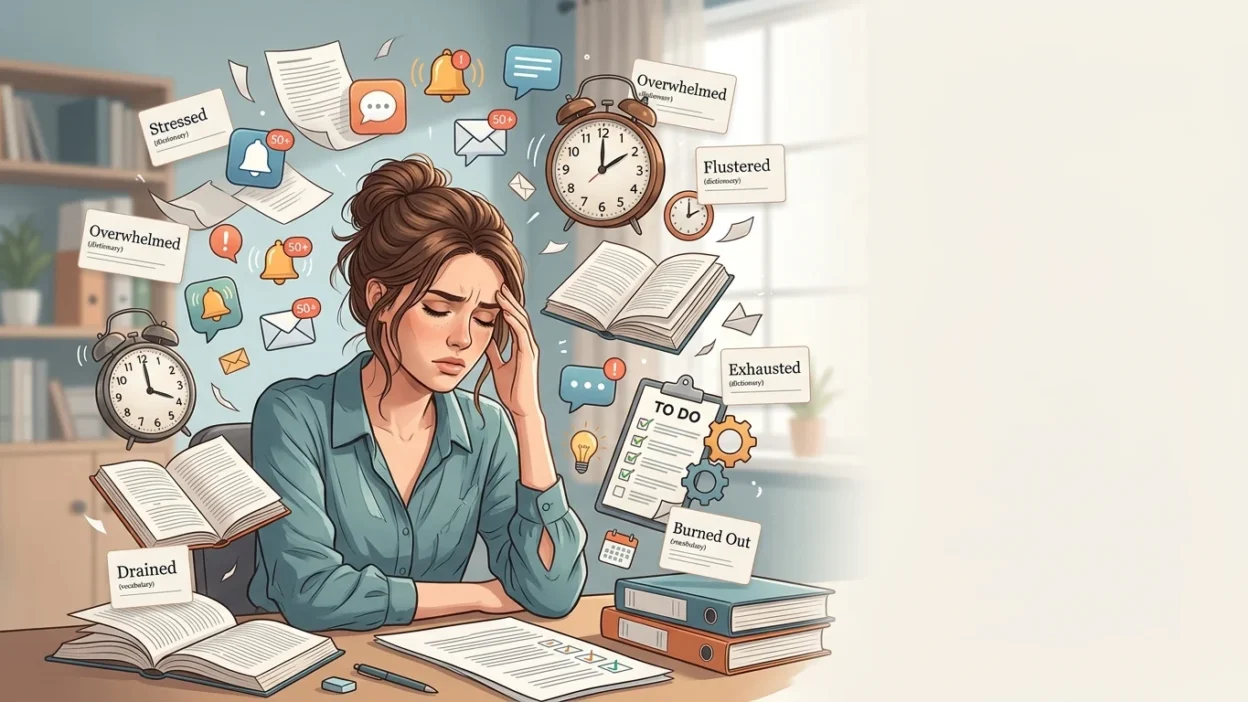
When life becomes too busy, stressful, or emotionally demanding, people often describe themselves as frazzled.
This word is common in everyday English and usually describes someone who feels mentally tired, nervous, confused, or overwhelmed by too many problems or responsibilities at once.
Learning frazzled synonyms can help you express these feelings more accurately and naturally.
The word frazzled is useful, but it does not always communicate exactly how someone feels. Sometimes a person is stressed, while another may be exhausted, overwhelmed, flustered, or agitated. These words are related, but each one has a slightly different meaning and emotional tone.
This guide explores 30 useful alternatives to frazzled. It is written for students, ESL learners, writers, and content creators who want to improve their vocabulary and choose words more precisely. Each synonym includes a simple meaning, an example sentence, and the best context for using it.
What Does “Frazzled” Mean?
Frazzled means feeling extremely stressed, tired, nervous, or mentally confused because of pressure, problems, or too many things happening at once.
For example:
After working all day and dealing with several unexpected problems, she felt completely frazzled.
The word often describes a mixture of mental exhaustion and emotional stress. It is usually informal and has a natural, conversational tone.
A frazzled person may:
- Feel overwhelmed by responsibilities
- Struggle to think clearly
- Become easily irritated
- Feel mentally exhausted
- Have difficulty staying calm
- Feel nervous or disorganized
30 Frazzled Synonyms
1. Stressed
Meaning: Feeling worried or under pressure.
Example: He felt stressed because he had three important deadlines in one week.
Best usage context: Everyday conversations, school, work, and general pressure.
2. Overwhelmed
Meaning: Feeling unable to manage everything because there is too much to do or think about.
Example: She felt overwhelmed by the amount of work waiting for her.
Best usage context: Heavy responsibilities, emotional pressure, and difficult situations.
3. Flustered
Meaning: Confused, nervous, or upset, especially when something unexpected happens.
Example: The sudden question left him flustered and unable to answer clearly.
Best usage context: Mistakes, surprises, public situations, and nervous reactions.
4. Agitated
Meaning: Feeling restless, upset, or emotionally disturbed.
Example: The constant noise made the tired passengers increasingly agitated.
Best usage context: Strong emotional irritation or restlessness.
5. Anxious
Meaning: Feeling worried, nervous, or uneasy about something.
Example: She felt anxious before her important examination.
Best usage context: Worry, uncertainty, future events, and nervousness.
6. Exhausted
Meaning: Extremely tired physically or mentally.
Example: After completing the long project, the entire team was exhausted.
Best usage context: Physical or mental tiredness.
7. Drained
Meaning: Having very little energy left.
Example: The stressful week left him emotionally drained.
Best usage context: Emotional, mental, or physical exhaustion.
8. Fraught
Meaning: Filled with worry, difficulty, or emotional tension.
Example: The negotiations were fraught with uncertainty.
Best usage context: Formal writing and stressful situations.
9. Tense
Meaning: Nervous, worried, or unable to relax.
Example: Everyone became tense as they waited for the results.
Best usage context: Anxiety, suspense, conflict, and stressful situations.
10. Distraught
Meaning: Extremely upset and emotionally troubled.
Example: The distraught parent was worried about the missing child.
Best usage context: Serious emotional distress and upsetting situations.
11. Nervous
Meaning: Worried, uneasy, or afraid about something.
Example: He felt nervous before speaking in front of the audience.
Best usage context: Everyday English and mild anxiety.
12. Panicked
Meaning: Suddenly feeling extreme fear or anxiety.
Example: She panicked when she realized she had lost her passport.
Best usage context: Sudden emergencies or intense fear.
13. Hectic
Meaning: Very busy, rushed, and full of activity.
Example: It had been a hectic morning at the office.
Best usage context: Busy schedules and fast-moving situations.
14. Harried
Meaning: Feeling stressed and pressured because of constant demands.
Example: The harried manager answered emails while preparing for the meeting.
Best usage context: Formal or literary descriptions of busy people.
15. Frazzled
Meaning: Extremely stressed, tired, or mentally confused.
Example: After handling one problem after another, she looked completely frazzled.
Best usage context: Informal descriptions of combined stress and exhaustion.
16. Overwrought
Meaning: Extremely emotional, nervous, or upset.
Example: The overwrought writer struggled to organize her thoughts.
Best usage context: Formal, literary, or emotional writing.
17. Perturbed
Meaning: Worried, disturbed, or slightly upset.
Example: He appeared perturbed by the unexpected change in plans.
Best usage context: Formal writing and moderate emotional disturbance.
18. Distracted
Meaning: Unable to concentrate because of worries or other thoughts.
Example: She was too distracted by her problems to focus on the lesson.
Best usage context: Lack of concentration and mental preoccupation.
19. Confused
Meaning: Unable to think clearly or understand what is happening.
Example: The complicated instructions left the new employee confused.
Best usage context: Lack of understanding or mental clarity.
20. Disorganized
Meaning: Unable to arrange thoughts, tasks, or activities properly.
Example: He felt disorganized after several unexpected tasks disrupted his schedule.
Best usage context: Work, planning, routines, and productivity.
21. Restless
Meaning: Unable to relax or remain calm.
Example: She felt restless after spending the entire day under pressure.
Best usage context: Nervous energy and inability to relax.
22. Irritated
Meaning: Slightly angry or annoyed.
Example: He became irritated after receiving several urgent messages.
Best usage context: Stress that leads to annoyance or anger.
23. Fraught with Anxiety
Meaning: Filled with worry and nervousness.
Example: The final week before the examination was fraught with anxiety.
Best usage context: Formal writing and serious situations.
24. Burned Out
Meaning: Extremely tired and mentally exhausted after long-term stress.
Example: After months of working without a break, she felt completely burned out.
Best usage context: Work, study, long-term stress, and emotional exhaustion.
25. Worn Out
Meaning: Very tired and lacking energy.
Example: He was worn out after managing the busy event.
Best usage context: Everyday English and physical or mental tiredness.
26. Beset
Meaning: Troubled or surrounded by many problems.
Example: The organization was beset by financial difficulties.
Best usage context: Formal writing and descriptions of serious problems.
27. Troubled
Meaning: Worried, unhappy, or experiencing difficulties.
Example: She had a troubled expression after hearing the news.
Best usage context: Emotional problems, personal difficulties, and serious situations.
28. Discombobulated
Meaning: Confused, disorganized, or unable to think clearly.
Example: The sudden change in plans left everyone feeling discombobulated.
Best usage context: Informal, humorous, and expressive writing.
29. Pressured
Meaning: Feeling stress because of demands or expectations.
Example: The student felt pressured by the approaching deadline.
Best usage context: School, work, performance, and responsibilities.
30. Emotionally Exhausted
Meaning: Mentally and emotionally tired after dealing with stress or difficult experiences.
Example: After supporting her family through a difficult time, she felt emotionally exhausted.
Best usage context: Emotional stress, relationships, and long-term difficulties.
Quick Comparison of Frazzled Synonyms
| Synonym | Main Meaning | Tone | Best Usage |
|---|---|---|---|
| Stressed | Under pressure | Neutral | Everyday situations |
| Overwhelmed | Unable to manage too much | Strong | Heavy responsibilities |
| Flustered | Nervous and confused | Informal | Unexpected events |
| Anxious | Worried or uneasy | Neutral | Future concerns |
| Exhausted | Extremely tired | Strong | Physical or mental fatigue |
| Drained | Having no energy left | Emotional | Long-term stress |
| Agitated | Upset and restless | Strong | Irritation and emotional tension |
| Tense | Unable to relax | Neutral | Stress and suspense |
| Distracted | Unable to concentrate | Neutral | Mental preoccupation |
| Burned out | Exhausted from long-term stress | Informal | Work and study |
| Harried | Pressured by constant demands | Formal | Busy people |
| Discombobulated | Confused and disorganized | Informal | Humorous or expressive writing |
Frazzled Synonyms for Different Situations
The best synonym depends on the exact kind of stress a person is experiencing.
- Stressed
- Pressured
- Tense
- Anxious
- Overwhelmed
- Hectic
- Harried
- Beset
- Flustered
- Confused
- Distracted
- Discombobulated
- Exhausted
- Drained
- Worn out
- Emotionally exhausted
- Burned out
- Drained
- Overwrought
- Troubled
- Distraught
- Panicked
- Agitated
- Overwrought
How to Choose the Right Synonym
Use “Stressed” for General Pressure
Stressed is the simplest and most common alternative to frazzled. Use it when someone feels pressure but you do not need to describe the exact emotional reaction.
I have been stressed because of my workload.
This word is natural in both spoken and written English.
Use “Overwhelmed” When There Is Too Much to Handle
Choose overwhelmed when a person feels unable to manage the amount of work, information, responsibility, or emotion they are facing.
She felt overwhelmed by all the responsibilities she had accepted.
This is one of the strongest and most useful alternatives to frazzled.
Use “Flustered” for Nervous Confusion
Use flustered when someone becomes confused or nervous because of a sudden event, mistake, question, or unexpected problem.
He became flustered when everyone began asking questions at once.
This word is especially useful for describing a temporary reaction.
Use “Anxious” for Worry
Choose anxious when the main feeling is worry or nervousness.
She felt anxious about the upcoming interview.
Unlike frazzled, anxious does not necessarily mean that the person is tired or disorganized.
Use “Exhausted” or “Drained” for Tiredness
If the main problem is a lack of energy, exhausted or drained is more accurate.
After the difficult week, he felt emotionally drained.
These words focus more on tiredness than confusion.
Use “Agitated” for Irritation and Restlessness
Choose agitated when someone is visibly upset, restless, or irritated.
The long delay made the passengers increasingly agitated.
This word suggests stronger emotional disturbance than ordinary stress.
Use “Burned Out” for Long-Term Stress
Burned out is a useful informal expression for someone who has become physically and mentally exhausted after prolonged pressure.
She felt burned out after months of working without proper rest.
It is especially common in conversations about careers, education, and demanding lifestyles.
Use “Distraught” for Serious Emotional Distress
Distraught is much stronger than frazzled. It describes someone who is deeply upset or emotionally troubled.
The distraught family waited for more information.
Use it carefully because it usually suggests a serious situation.
Formal and Informal Frazzled Synonyms
Some alternatives are more natural in everyday conversation, while others work better in formal writing.
Informal Choices
- Frazzled
- Stressed
- Flustered
- Burned out
- Worn out
- Discombobulated
Neutral Choices
- Anxious
- Overwhelmed
- Tense
- Nervous
- Distracted
- Exhausted
Formal Choices
- Agitated
- Perturbed
- Overwrought
- Harried
- Beset
- Distraught
Choosing the right level of formality helps your writing sound natural and appropriate.
Common Mistakes When Using Frazzled Synonyms
One common mistake is treating all stress-related words as exact replacements. For example, exhausted focuses mainly on tiredness, while anxious focuses on worry. Neither word always carries the full combination of stress, confusion, and exhaustion found in frazzled.
Another mistake is using a very strong word for a mild situation. Distraught suggests serious emotional distress, while stressed may describe something much less severe.
It is also important to remember that frazzled is usually informal. In a formal essay, words such as overwhelmed, agitated, anxious, or emotionally exhausted may sound more appropriate.
Frequently Asked Questions About Frazzled Synonyms
What is the best synonym for frazzled?
The best general synonym is stressed or overwhelmed. The correct choice depends on whether the main feeling is pressure or an inability to manage too many responsibilities.
Is “overwhelmed” stronger than “frazzled”?
Often, yes. Overwhelmed usually suggests that a person feels unable to cope with the amount of work, responsibility, or emotion they are facing.
What is a synonym for frazzled and tired?
Good choices include exhausted, drained, worn out, and emotionally exhausted.
What is a formal synonym for frazzled?
Formal alternatives include agitated, perturbed, overwrought, harried, and emotionally exhausted, depending on the context.
What is a simple synonym for frazzled?
The simplest alternatives are stressed, tired, nervous, and overwhelmed.
Is “flustered” the same as “frazzled”?
The words are similar but not identical. Flustered usually describes temporary nervous confusion, while frazzled often suggests a combination of stress, tiredness, and mental exhaustion.
Conclusion
The word frazzled is a useful way to describe someone who feels stressed, tired, confused, or overwhelmed by pressure. However, choosing a more specific synonym can make your writing clearer and more expressive.
Use stressed for general pressure, overwhelmed when there is too much to handle, flustered for nervous confusion, anxious for worry, and exhausted or drained for extreme tiredness. For long-term pressure, burned out is a natural informal choice, while agitated, harried, and overwrought can work well in more formal writing.
Understanding these differences helps students, ESL learners, writers, and content creators express emotions with greater accuracy. The best synonym is not always the most powerful word—it is the word that most precisely matches the feeling and situation.

John Morrison is a dedicated content writer at Synomity.com, focused on synonyms, vocabulary development, and word meanings. He creates clear, educational resources that help readers improve language skills and communicate with confidence.