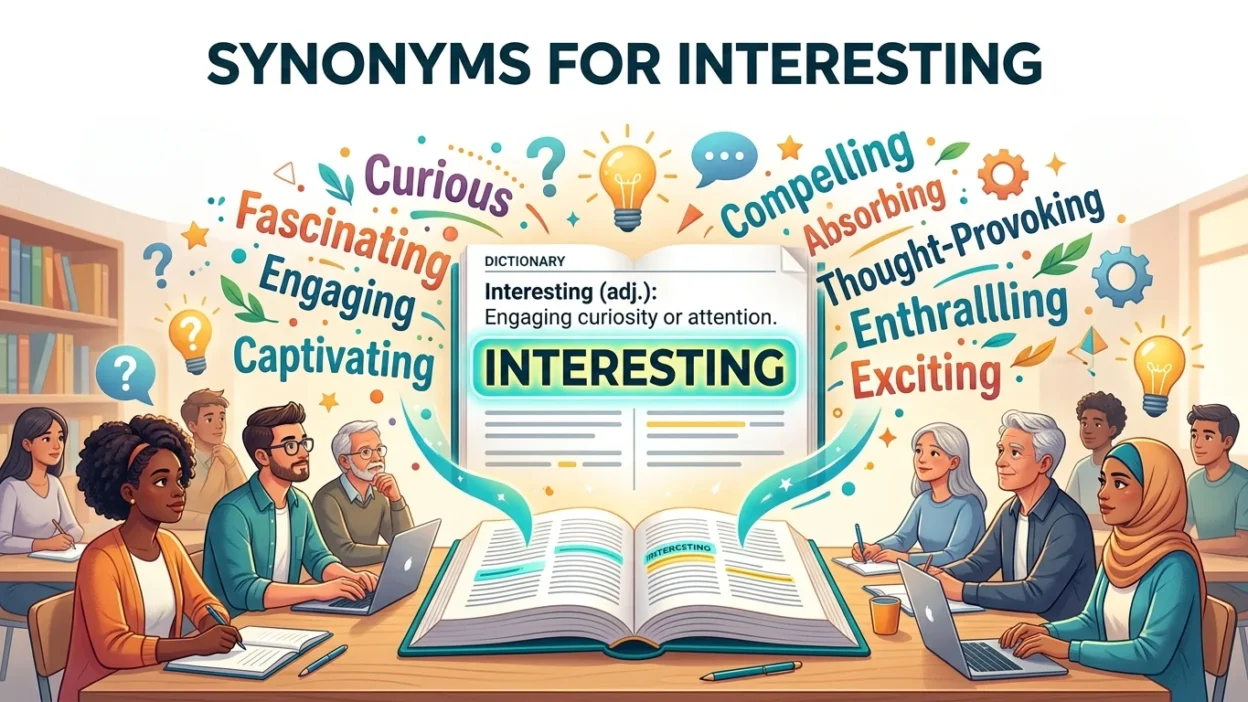
When exploring synonyms for interesting, you notice how this adjective describes ideas that spark curious minds and hold attention naturally. During a speech, every audience member may hope for moments of fascination, gazing closely at the speaker and listening to each saying that truly catches interest. From my experience, the right word makes communication more engaging and memorable.
Sometimes, people use “interesting” in a more doubtful tone when they are taken aback but still want to remain polite. I remember a story about a grandmother reacting to a new tattoo by saying it was certainly interesting. She was not exactly enthusiastic, yet her feeling reflected an effort to be kind while expressing uncertainty.
Word choice often depends on context. An unusual outfit, a weird expression on someone’s face, or striking body art can all be called interesting for different reasons. Understanding these shades of meaning helps writers and learners choose words more carefully and communicate with greater confidence.
Meaning of Demure
What Does “Demure” Mean?
The word demure describes a person who appears modest, reserved, quiet, and well-behaved. It is often used to describe someone’s manner, clothing style, or behavior that reflects simplicity and grace rather than boldness or attention-seeking.
Tone and Usage Context
The tone of demure is generally positive. It often suggests elegance, self-control, and politeness. However, in some contexts, it may imply excessive shyness or deliberate modesty.
Example:
She gave a demure smile and thanked everyone for their compliments.
30 Synonyms of Demure
1. Modest
Meaning: Not showing off abilities, appearance, or achievements.
Example: Despite winning the award, she remained modest about her success.
Best Usage Context: Humble personalities and behavior.
2. Reserved
Meaning: Quiet and not expressive about emotions.
Example: He was reserved during the meeting but listened carefully.
Best Usage Context: Introverted people.
3. Shy
Meaning: Nervous or uncomfortable around others.
Example: The shy student hesitated before answering.
Best Usage Context: Social situations.
4. Humble
Meaning: Having a low opinion of one’s importance.
Example: The famous athlete stayed humble throughout his career.
Best Usage Context: Character traits.
5. Quiet
Meaning: Not speaking much.
Example: She remained quiet during the discussion.
Best Usage Context: Describing communication style.
6. Unassuming
Meaning: Not trying to attract attention.
Example: His unassuming nature made him easy to approach.
Best Usage Context: Personality descriptions.
7. Meek
Meaning: Gentle and submissive.
Example: The meek employee rarely argued with others.
Best Usage Context: Soft personalities.
8. Retiring
Meaning: Avoiding public attention.
Example: The retiring artist preferred privacy.
Best Usage Context: Private individuals.
9. Timid
Meaning: Lacking confidence or courage.
Example: The timid child hid behind her mother.
Best Usage Context: Fearful behavior.
10. Coy
Meaning: Pretending to be shy in a playful way.
Example: She gave him a coy glance.
Best Usage Context: Romantic interactions.
11. Bashful
Meaning: Easily embarrassed.
Example: He looked bashful after receiving praise.
Best Usage Context: Social awkwardness.
12. Proper
Meaning: Following accepted standards of behavior.
Example: Her proper manners impressed everyone.
Best Usage Context: Formal settings.
13. Decorous
Meaning: Showing good taste and politeness.
Example: Guests maintained decorous behavior.
Best Usage Context: Professional environments.
14. Prim
Meaning: Extremely proper and formal.
Example: The prim teacher disliked noisy classrooms.
Best Usage Context: Traditional personalities.
15. Ladylike
Meaning: Showing refined manners.
Example: She carried herself in a ladylike manner.
Best Usage Context: Traditional etiquette.
16. Graceful
Meaning: Elegant in movement or behavior.
Example: The dancer appeared graceful on stage.
Best Usage Context: Elegance and poise.
17. Polite
Meaning: Respectful and considerate.
Example: The polite customer thanked the waiter.
Best Usage Context: Everyday interactions.
18. Well-Mannered
Meaning: Having good manners.
Example: Their children are well-mannered.
Best Usage Context: Social behavior.
19. Discreet
Meaning: Careful not to attract attention.
Example: She remained discreet about the matter.
Best Usage Context: Sensitive situations.
20. Restrained
Meaning: Controlled and moderate.
Example: His restrained response prevented conflict.
Best Usage Context: Emotional control.
21. Self-Effacing
Meaning: Avoiding attention or praise.
Example: The self-effacing scientist credited the whole team.
Best Usage Context: Humility.
22. Introverted
Meaning: Preferring solitude and reflection.
Example: Introverted people often enjoy quiet activities.
Best Usage Context: Personality discussions.
23. Conservative
Meaning: Traditional in appearance or behavior.
Example: She preferred conservative clothing.
Best Usage Context: Fashion and values.
24. Dignified
Meaning: Calm and worthy of respect.
Example: He handled criticism in a dignified way.
Best Usage Context: Professional conduct.
25. Gentle
Meaning: Kind and soft in manner.
Example: Her gentle voice calmed everyone.
Best Usage Context: Compassionate behavior.
26. Mild
Meaning: Not harsh or aggressive.
Example: He had a mild personality.
Best Usage Context: Temperament.
27. Soft-Spoken
Meaning: Speaking in a quiet voice.
Example: The soft-spoken manager earned respect.
Best Usage Context: Communication style.
28. Subdued
Meaning: Calm and less intense.
Example: The celebration was subdued after the news.
Best Usage Context: Mood descriptions.
29. Chaste
Meaning: Pure and modest.
Example: The novel portrayed a chaste heroine.
Best Usage Context: Literary contexts.
30. Refined
Meaning: Elegant and cultured.
Example: Her refined taste was evident in her choices.
Best Usage Context: Sophisticated settings.
Comparison Guide: When to Use Different Synonyms
Quick Reference Table
| Synonym | Best For | Tone |
|---|---|---|
| Modest | Humility | Positive |
| Reserved | Introversion | Neutral |
| Shy | Social nervousness | Neutral |
| Coy | Flirtatious modesty | Playful |
| Prim | Strict formality | Slightly Critical |
| Graceful | Elegance | Positive |
| Gentle | Kindness | Positive |
| Discreet | Privacy | Professional |
| Self-Effacing | Avoiding praise | Positive |
| Soft-Spoken | Quiet speech | Neutral |
| Refined | Sophistication | Positive |
| Timid | Lack of confidence | Slightly Negative |
How to Choose the Right Synonym
For Humility and Simplicity
Choose words such as modest, humble, and self-effacing when describing people who avoid boasting and value humility.
For Quiet Personalities
Use reserved, introverted, soft-spoken, and quiet when referring to people who naturally speak less or keep emotions private.
For Elegance and Good Manners
Select graceful, refined, proper, decorous, and well-mannered to emphasize sophistication and polished behavior.
For Shyness and Hesitation
Words like shy, bashful, timid, and meek work best when describing nervousness or a lack of confidence.
For Privacy and Self-Control
Use discreet, restrained, and subdued when highlighting careful, controlled, or low-key behavior.
Why Learning Synonyms of Demure Matters
Expanding Your Vocabulary
Knowing multiple alternatives allows you to express ideas with greater accuracy and creativity.
Improving Writing Quality
Writers can avoid repetition and create more engaging content by choosing the most suitable synonym.
Enhancing ESL Communication
ESL learners gain confidence by understanding subtle differences between similar words.
Matching Tone Correctly
Selecting the right synonym ensures your message reflects the intended mood and meaning.
Conclusion
Learning the various synonyms of demure helps you move beyond basic vocabulary and communicate with greater precision. Although words like modest, reserved, shy, and graceful share similarities, each offers a unique shade of meaning. Understanding these nuances enables students, ESL learners, writers, and content creators to choose words that perfectly fit their message.
The next time you want to describe someone who is quietly elegant, polite, or reserved, explore these alternatives and select the synonym that best captures the tone you wish to convey. A richer vocabulary not only improves writing but also strengthens everyday communication.

John Morrison is a dedicated content writer at Synomity.com, focused on synonyms, vocabulary development, and word meanings. He creates clear, educational resources that help readers improve language skills and communicate with confidence.