The word “swing” is an irregular verb, and its past tense and past participle are both “swung.” Unlike regular verbs, which usually form the past tense by adding -ed, the verb “swing” changes its spelling. For example, you can say, “The child swung on the playground swing yesterday.”
Learning the correct forms of swing is important for students, English learners, writers, and anyone who wants to improve their grammar. This verb describes movements from side to side, back and forth, or around a fixed point.
It can also mean changing direction, making a sudden movement, or influencing a situation. Understanding its three main forms will help you use it correctly in everyday conversations and written English. In this guide, you will learn the present tense, past tense, and past participle of swing, along with practical examples, common mistakes, and simple memory tricks to remember the correct forms.
Quick Answer: What Is the Past Tense of Swing?
The past tense of swing is “swung.” Its past participle is also “swung,” while the base form is “swing.” Because swing is an irregular verb, it does not follow the usual rule of adding -ed to form the past tense.
- Base form: Swing
- Past tense: Swung
- Past participle: Swung
- Present participle: Swinging
Example: She swung the door open yesterday.
Why Do People Confuse the Swing Irregular Verb?
People sometimes confuse the forms of swing because many English verbs form their past tense by adding -ed. For example, walk becomes walked, and jump becomes jumped. However, swing follows an irregular pattern.
The correct past forms are swung, not swinged. Another source of confusion is the difference between the simple past and the past participle. Fortunately, both forms use the same word: swung.
Compare these sentences:
- Simple past: He swung the bat.
- Present perfect: He has swung the bat.
- Past perfect: He had swung the bat.
The verb changes according to the tense structure, but the past form remains the same.
First Word: Swing
Swing is the base form of the verb. It describes moving something backward and forward, from side to side, or around a point.
Meaning of Swing
The word swing can be used in several ways:
- Physical movement: To move back and forth or from side to side.
- Sports: To move a bat, racket, or golf club through the air.
- Direction: To turn or change direction.
- Figurative meaning: To change suddenly or influence an outcome.
Examples of Swing in Sentences
- I swing my arms when I walk.
- The children swing at the playground every afternoon.
- He can swing a baseball bat very quickly.
- The gate begins to swing in the wind.
- We swing by the store on our way home.
In the last example, “swing by” is an informal expression meaning to visit a place briefly.
Second Word: Swung
Swung is the simple past tense and past participle of swing. It describes a movement that happened in the past or is used with an auxiliary verb to form perfect tenses and certain passive constructions.
Meaning of Swung
The word swung can describe a completed movement or action. Its precise meaning depends on the context.
Examples:
- The monkey swung from one branch to another.
- She swung the bat and hit the ball.
- The door swung open.
- The team’s chances swung in its favor.
- He has swung the golf club hundreds of times.
Notice that “swung” remains unchanged in both the simple past and past participle forms.
Swing vs. Swung: Comparison Table
| Verb form | Usage | Example |
| Swing | Base form | I swing the bat. |
| Swings | Present tense with he, she, or it | She swings the bat. |
| Swung | Simple past tense | She swung the bat yesterday. |
| Swung | Past participle | She has swung the bat. |
| Swinging | Present participle or gerund | He is swinging on the bar. |
The main point to remember is that swing changes to swung in the past tense and past participle. The form “swinging” is used in continuous tenses and as a noun-like gerund.
When to Use Swing and Swung
Choosing the correct form depends on the sentence’s tense and grammatical structure.
When to Use Swing
Use “swing” in the base form, after modal verbs, with “to,” and with plural subjects in the simple present.
Examples:
- I swing on the playground every weekend.
- They swing their arms while running.
- You should swing the bat carefully.
- She wants to swing on the new swing.
- We will swing by your house later.
Remember that the simple present uses “swings” with he, she, and it.
When to Use Swung
Use “swung” when describing a completed past action or when forming perfect tenses with auxiliary verbs.
Examples:
- He swung the door open.
- The children swung from the ropes.
- She has swung the racket before.
- They had swung the gate shut before sunset.
- The conversation has swung in a different direction.
The difference is straightforward: use “swung” for past actions and after auxiliary verbs such as has, have, and had when the sentence requires a past participle.
12 Examples of Swing and Swung in Sentences
Here are practical examples showing how to use the verb correctly in different situations.
- Present tense: I swing my arms while jogging.
- Present tense: She swings on the garden swing every evening.
- Simple past: He swung the bat at the ball.
- Simple past: The door swung open during the storm.
- Simple past: The child swung from the monkey bars.
- Present perfect: We have swung by that shop several times.
- Past perfect: She had swung the door shut before leaving.
- Future tense: They will swing the sign into position.
- Modal verb: You can swing the rope over the branch.
- Continuous tense: The pendulum is swinging from side to side.
- Figurative use: Public opinion swung toward the new proposal.
- Sports use: The golfer swung the club and watched the ball fly.
These examples demonstrate that the correct verb form depends on the sentence structure, not simply on whether the action involves movement.
Common Mistakes When Using Swing
English learners sometimes make predictable mistakes when using irregular verbs. Here are the most common errors involving swing.
Mistake 1: Using “Swinged” Instead of “Swung”
Incorrect: She swinged the bat yesterday.
Correct: She swung the bat yesterday.
“Swinged” is not the standard past-tense form of the verb swing in modern standard English.
Mistake 2: Using “Swang” Instead of “Swung”
Incorrect: The child swang on the playground.
Correct: The child swung on the playground.
Although “swang” appears in some dialectal or informal usage, “swung” is the standard form for general written and spoken English.
Mistake 3: Using “Swing” After “Has” or “Have”
Incorrect: He has swing the bat.
Correct: He has swung the bat.
The present perfect tense requires the past participle, which is “swung.”
Mistake 4: Using “Swung” in the Wrong Continuous Form
Incorrect: She is swung on the swing.
Correct: She is swinging on the swing.
Continuous tenses use the -ing form of the verb after the appropriate form of be.
Mistake 5: Forgetting Subject-Verb Agreement
Incorrect: He swing every morning.
Correct: He swings every morning.
In the simple present tense, add -s to swing when the subject is he, she, or it.
Memory Trick: How to Remember Swing, Swung, Swung
A simple way to remember this irregular verb is to memorize its three main forms together:
Swing → Swung → Swung
Think of the i in “swing” changing to u in “swung.” The last two forms are identical, so you only need to remember one spelling for both the simple past and past participle.
Try repeating this short sentence:
- Today, I swing.
- Yesterday, I swung.
- I have swung before.
You can also practice with other irregular verbs that change their vowel sounds, such as sing → sang → sung and ring → rang → rung. These patterns can help you recognize irregular verb forms, although not every verb follows exactly the same pattern.
American vs. British English: Is Swing Different?
The past tense of swing is the same in standard American and British English. In both varieties, the correct forms are swing, swung, and swung.
| Verb form | American English | British English |
| Base form | Swing | Swing |
| Simple past | Swung | Swung |
| Past participle | Swung | Swung |
| Present participle | Swinging | Swinging |
Examples:
- American English: He swung the bat during practice.
- British English: He swung the bat during practice.
There is no spelling difference between these forms in standard American and British English. Other English verbs, such as learned/learnt, may have regional variations, but swing does not typically change in this way.
Similar Words to Swing and Swung
Learning related irregular verbs can help you improve your vocabulary and understand how English verb forms work.
| Base form | Past tense | Past participle |
| Sing | Sang | Sung |
| Ring | Rang | Rung |
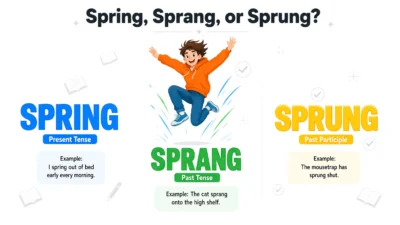
| Spring | Sprang | Sprung |
| Drink | Drank | Drunk |
| Begin | Began | Begun |
| Run | Ran | Run |
| Swim | Swam | Swum |
| Bring | Brought | Brought |
| Hang | Hung | Hung |
| String | Strung | Strung |
Some verbs have similar vowel changes, while others follow different patterns. For example, “sing” changes to “sang” in the simple past, whereas “swing” changes to “swung.” Learning each verb’s forms is more reliable than assuming every irregular verb follows the same rule.
Final Verdict: What Is the Correct Form of Swing?
The correct past tense of swing is swung, and its past participle is also swung. “Swinged” is not the standard form, so use “swung” in everyday conversation, schoolwork, exams, and formal writing.
Remember these three forms:
- Present/base form: Swing
- Past tense: Swung
- Past participle: Swung
For example, say “I swing the bat every day,” “I swung the bat yesterday,” and “I have swung the bat before.” These sentences demonstrate how the verb changes according to tense and grammatical structure.
FAQs:
1. What is the past tense of swing?
The past tense of swing is swung. Use it to describe an action that happened in the past.
Example: The child swung on the playground yesterday.
2. Is swing an irregular verb?
Yes, swing is an irregular verb because it does not form its simple past tense by adding -ed. Its past tense and past participle are both “swung.”
3. Is it “swinged” or “swung”?
“Swung” is the correct standard form. For example, say “He swung the bat,” not “He swinged the bat.”
4. What is the past participle of swing?
The past participle of swing is “swung.” It is used with auxiliary verbs to form perfect tenses.
Example: She has swung the bat many times.
5. What are the three forms of swing?
The three principal forms are swing (base form), swung (simple past), and swung (past participle).
Example: I swing, I swung, and I have swung.
6. What is the difference between swung and swinging?
“Swung” is the simple past tense and past participle, while “swinging” is the present participle and gerund.
Examples: “He swung the rope yesterday” and “He is swinging the rope now.”
7. Is “swang” ever correct?
“Swang” occurs in some dialectal or informal usage, but “swung” is the accepted standard form in modern general English. Use “swung” for school assignments, exams, and formal writing.
Remember This
- Swing is an irregular verb.
- The past tense of swing is swung.
- The past participle of swing is swung.
- “Swinged” is not the standard past-tense form.
- Use “swinging” in continuous tenses.
- American and British English use the same standard forms.
The easiest rule: Swing → Swung → Swung.
Conclusion
Understanding the irregular verb swing is easy once you learn its three main forms. The base form is “swing,” while both the simple past tense and past participle are “swung.” Unlike regular verbs, swing does not take -ed to form its past tense. Remembering this pattern will help you avoid common mistakes such as “swinged” and “swang” in standard English.
Practice using swing and swung in your own sentences to build confidence. For example, write “I swing every morning,” “I swung yesterday,” and “I have swung before.” With regular practice, you will naturally recognize the correct form and use it accurately in conversations, essays, exams, and everyday writing.