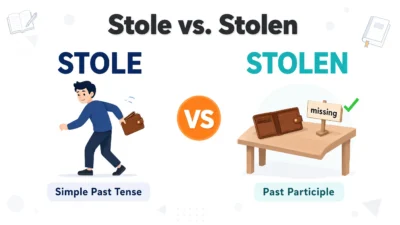
Have you ever wondered if to write threw or thrown when talking about something that happened in the past? Both words come from the verb throw, but they are used in different grammatical situations. Choosing the correct form can make your English clearer and help you avoid common writing mistakes.
The main difference is simple: threw is the simple past tense of throw, while thrown is its past participle. Use threw when describing a completed action in the past, such as “She threw the ball.” Use thrown with helping verbs such as has, have, had, or was, depending on the sentence structure. For example, “She has thrown the ball” and “The ball was thrown across the field” are both correct.
Understanding this difference is especially useful for students, ESL learners, and anyone who wants to improve their grammar. In this guide, you will learn the meanings of both words, their grammatical rules, common mistakes, and practical examples that show exactly when to use each form.
Quick Answer: Threw vs. Thrown
Threw is the simple past tense of throw, used for a completed action in the past. Thrown is the past participle, usually used with helping verbs such as has, have, and had, or in passive constructions. Say “He threw the ball” but “He has thrown the ball.” Both words are correct in the right context.
Why Do People Confuse Threw and Thrown?
People often confuse these words because they come from the same verb and describe the same basic action. Their spellings are also different from the regular pattern of adding -ed to a verb.
However, English has many irregular verbs with different past-tense and past-participle forms. For example:
- Throw → threw → thrown
- Grow → grew → grown
- Know → knew → known
- Fly → flew → flown
The key is to recognize the grammatical structure of the sentence. If you are simply describing a past action, threw is usually the right choice. If you are using a perfect tense or a passive construction, thrown is often needed.
What Does Threw Mean?
Threw is the simple past tense of the verb throw. It describes an action that happened and was completed in the past.
The verb throw can mean to send something through the air using your hand or arm. It can also have figurative meanings, such as suddenly organizing an event or causing someone to become confused.
Examples of Threw in Sentences
- He threw the ball to his teammate.
- She threw the old papers into the bin.
- The child threw a stone into the pond.
- They threw a surprise party for their friend.
- The unexpected question threw me off.
In each sentence, threw describes an action or event in the past.
When Should You Use Threw?
Use threw when you want to describe a completed past action without a perfect-tense helping verb.
For example:
- Correct: I threw my jacket onto the chair.
- Incorrect: I thrown my jacket onto the chair.
The second sentence is incorrect because thrown cannot normally stand alone as the simple past tense in an active sentence.
What Does Thrown Mean?
Thrown is the past participle of throw. It is commonly used with has, have, and had to form perfect tenses. It is also used in passive sentences, often with forms of be.
Unlike threw, thrown usually needs a helping verb when it functions as a verb form in a sentence.
Examples of Thrown in Sentences
- She has thrown the ball over the fence.
- They have thrown away the broken furniture.
- He had thrown the letter into the fire before I arrived.
- The ball was thrown by the captain.
- Several questions have been thrown at the speaker.
These examples show how thrown works with helping verbs to express completed actions or passive constructions.
When Should You Use Thrown?
Use thrown in the following situations:
1. With has, have, or had
- I have thrown away the empty box.
- She has thrown the ball twice.
- They had thrown the rubbish out before sunset.
2. In passive sentences
- The ball was thrown across the room.
- The documents were thrown into the bin.
- The challenge has been thrown down.
3. In perfect passive constructions
- The ball has been thrown.
- The old clothes had been thrown away.
Remember that thrown is a past participle, not the simple past tense.
Threw vs. Thrown: Comparison Table
| Feature | Threw | Thrown |
| Verb form | Simple past tense | Past participle |
| Base verb | Throw | Throw |
| Common use | Completed past action | Perfect tenses and passive voice |
| Used alone in active past sentences? | Yes | Usually no |
| Common helping verbs | Not normally needed | Has, have, had, is, was, were, been |
| Example | He threw the ball. | He has thrown the ball. |
The easiest way to remember the difference is that threw reports a past action, while thrown usually works with another verb.
When Should You Use Threw or Thrown?
Choosing the correct word becomes easier when you look at the other words in your sentence.
Use Threw for a Simple Past Action
When the action happened in the past, use threw.
Examples:
- The goalkeeper threw the ball to his teammate.
- I threw the empty bottle into the recycling bin.
- She threw the keys onto the table.
Use Thrown With Has, Have, or Had
When the sentence uses a perfect tense, choose thrown.
Examples:
- He has thrown his old shoes away.
- We have thrown the ball several times.
- She had thrown the letter away before reading it.
Use Thrown in Passive Voice
In passive sentences, the subject receives the action rather than performing it.
Examples:
- The ball was thrown by the player.
- The invitations were thrown away by mistake.
- The stone has been thrown into the lake.
Can You Use Thrown Without a Helping Verb?
Yes, thrown can appear without a nearby helping verb when it functions as an adjective or as part of a reduced phrase.
For example:
- The thrown object landed near the wall.
- The ball, thrown by the youngest player, crossed the field.
However, in a standard active sentence describing a simple past action, use threw: “He threw the ball.”
12 Examples of Threw and Thrown in Sentences
Here are practical examples that show the difference between the two forms.
| No. | Sentence | Correct word |
| 1 | The boy ___ the ball over the fence. | Threw |
| 2 | She has ___ her old shoes away. | Thrown |
| 3 | He ___ a stone into the river yesterday. | Threw |
| 4 | The ball was ___ by the goalkeeper. | Thrown |
| 5 | They had ___ the rubbish away before we arrived. | Thrown |
| 6 | I ___ my bag onto the bed. | Threw |
| 7 | Someone has ___ the window open. | Thrown |
| 8 | The player ___ the ball to his captain. | Threw |
| 9 | The documents were ___ into a box. | Thrown |
| 10 | She had ___ the letter into the fire. | Thrown |
| 11 | The unexpected news ___ him off balance. | Threw |
| 12 | The ball has been ___ across the playground. | Thrown |
More Examples in Everyday English
Using threw:
- The dog threw its toy into the air.
- I threw away the expired food.
- He threw his hands up in surprise.
- The sudden change threw us off schedule.
Using thrown:
- I have thrown away the receipt.
- The children had thrown their toys everywhere.
- The ball was thrown too far.
- She has been thrown into a difficult situation.
These examples also demonstrate that throw can be used figuratively, not just for physically tossing objects.
Common Mistakes to Avoid
Even experienced English learners sometimes mix up these two forms. Here are the mistakes to watch for.
Mistake 1: Using Thrown as the Simple Past Tense
Incorrect: He thrown the ball yesterday.
Correct: He threw the ball yesterday.
Why? Threw is the simple past tense. Thrown requires a suitable grammatical construction.
Mistake 2: Using Threw After Has or Have
Incorrect: She has threw the ball.
Correct: She has thrown the ball.
Why? The present perfect tense uses has or have plus the past participle.
Mistake 3: Using Threw After Had
Incorrect: They had threw the rubbish away.
Correct: They had thrown the rubbish away.
Why? The past perfect tense uses had plus the past participle.
Mistake 4: Confusing Active and Passive Sentences
Incorrect: The ball was threw by the player.
Correct: The ball was thrown by the player.
Why? Passive constructions use a form of be followed by the past participle.
Mistake 5: Thinking Threw and Thrown Are Interchangeable
Although both words come from throw, they cannot replace each other in every sentence.
- Correct: She threw the keys.
- Correct: She has thrown the keys.
- Incorrect: She has threw the keys.
Always check the verb structure before deciding which form to use.
Memory Trick: How to Remember Threw vs. Thrown
A simple memory trick can help you choose the right word quickly.
Threw = yesterday.
Think of a completed action in the past:
- Yesterday, I threw the ball.
Thrown = has, have, had, or passive voice.
Think of a helping verb:
- I have thrown the ball.
- She had thrown the ball.
- The ball was thrown.
Another useful trick is to memorize the three principal forms together:
Throw → Threw → Thrown
Say the sequence aloud a few times. Learning the forms as a group makes it easier to remember which word belongs in each sentence.
Threw vs. Thrown in American and British English
There is no meaningful difference between American and British English in the standard grammatical use of threw and thrown. Both varieties use threw as the simple past tense and thrown as the past participle.
Examples in both varieties:
- American English: He threw the ball across the yard.
- British English: He threw the ball across the garden.
- American English: She has thrown away the old papers.
- British English: She has thrown away the old papers.
The vocabulary surrounding the action may vary by region, but the verb forms remain the same. Neither threw nor thrown is exclusively American or British.
Similar Words: Throw, Threw, Thrown, and Throwing
Understanding all the main forms of throw can prevent additional grammar mistakes.
| Word | Grammatical form | Example |
| Throw | Base form | Please throw the ball. |
| Throws | Present tense, third-person singular | She throws the ball every day. |
| Threw | Simple past tense | She threw the ball yesterday. |
| Thrown | Past participle | She has thrown the ball. |
| Throwing | Present participle or gerund | He is throwing the ball. |
Throw vs. Threw
Use throw for the base form, commands, and certain present-tense constructions. Use threw for a completed action in the past.
- Throw the ball to me.
- I threw the ball to you yesterday.
Threw vs. Throwing
Threw describes a completed past action. Throwing usually describes an ongoing action or functions as a noun.
- He threw the ball.
- He is throwing the ball.
Thrown vs. Threw
Remember that threw is the simple past form, while thrown is the past participle.
- She threw the ball.
- She has thrown the ball.
Final Verdict: Which Is Correct, Threw or Thrown?
Both threw and thrown are correct English words, but they serve different grammatical purposes.
Choose threw when describing a completed past action: “He threw the ball.”
Choose thrown when using a perfect tense or passive construction: “He has thrown the ball” or “The ball was thrown.”
If you are unsure, look for helping verbs such as has, have, had, or was. They often signal that thrown is the form you need. Checking the sentence structure is more reliable than choosing the word based only on how it sounds.
FAQs:
1. Is it threw or thrown?
Both are correct. Threw is the simple past tense of throw, while thrown is the past participle. For example, “I threw the ball” and “I have thrown the ball” are both grammatically correct.
2. Is threw the past tense of throw?
Yes. Threw is the simple past tense of throw. Use it to describe an action that happened in the past, such as “She threw the paper into the bin.”
3. Is thrown the past tense of throw?
No. Thrown is the past participle of throw, not the simple past tense. It is used in perfect tenses and passive constructions, as in “He has thrown the ball” and “The ball was thrown.”
4. Is it has threw or has thrown?
The correct phrase is has thrown. The present perfect tense follows the structure has/have + past participle. For example, “She has thrown the ball” is correct, while “She has threw the ball” is incorrect.
5. Is it had threw or had thrown?
The correct phrase is had thrown. The past perfect tense uses had followed by the past participle. For example, “He had thrown away the letter before I arrived.”
6. Is it was threw or was thrown?
The correct passive construction is was thrown. For example, “The ball was thrown by the player.” Here, was is followed by the past participle thrown.
7. What are the three forms of throw?
The three principal forms are throw – threw – thrown. Throw is the base form, threw is the simple past tense, and thrown is the past participle.
Remember This
- Throw: Base form — “Throw the ball.”
- Threw: Simple past — “He threw the ball.”
- Thrown: Past participle — “He has thrown the ball.”
- Has, have, or had + thrown: Used in perfect tenses.
- Was, were, or been + thrown: Common in passive constructions.
The golden rule is simple: use threw for a simple past action and thrown when the grammar calls for a past participle.
Conclusion
Understanding the difference between threw and thrown is easier when you remember their grammatical roles. Threw describes a completed action in the past, while thrown is the past participle used in perfect tenses and passive sentences.
For example, “They threw the ball” describes a past action, whereas “They have thrown the ball” uses the present perfect tense. Both forms are correct when used in the right context.
To improve your English, practice the three forms together: throw, threw, and thrown. Read example sentences, write your own, and check if the sentence needs a simple past tense or a past participle. With regular practice, you will recognize the correct form naturally and avoid common mistakes in speaking, writing, and everyday communication.

John Morrison is a dedicated content writer at Synomity.com, focused on synonyms, vocabulary development, and word meanings. He creates clear, educational resources that help readers improve language skills and communicate with confidence.