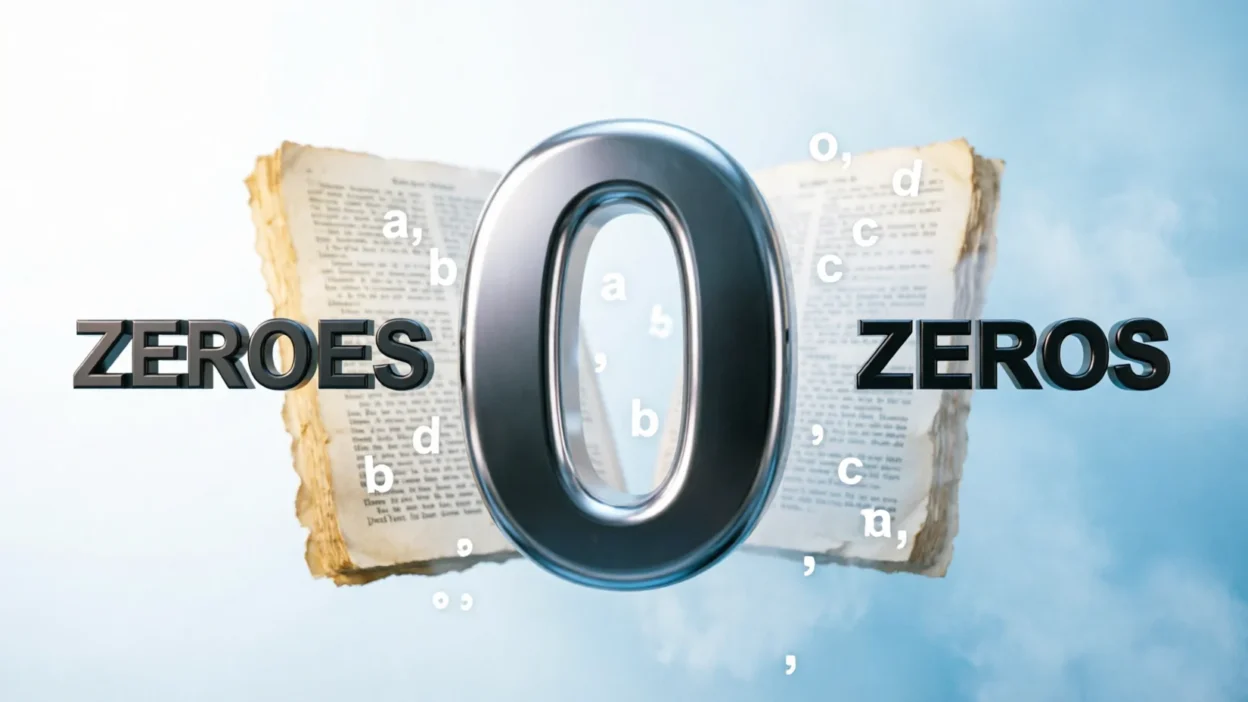
If you are wondering if “zeroes” or “zeros” is the correct plural of zero, both spellings are accepted in English. “Zeros” is the more common spelling, especially in American English, while “zeroes” is also correct and remains common in British English and some formal contexts. The choice usually depends on your preferred variety of English and the style you are following.
The word zero can be a noun, verb, or part of a compound expression. Its plural form may therefore appear in sentences about numbers, scores, measurements, or actions such as zeroing a device. Understanding the difference between zeros and zeroes helps you write naturally and avoid thinking that one form is simply a spelling mistake.
Quick Answer
Zeros and zeroes are both correct plural forms of “zero.” Zeros is generally more common in American English, while zeroes is also widely used, particularly in British English. For most writing, zeros is the safest general choice, but zeroes is not incorrect.
Why Do People Confuse It?
The confusion comes from the fact that zero does not have only one accepted plural spelling.
Many English words ending in -o form their plurals with -es, such as:
- tomato → tomatoes
- potato → potatoes
- hero → heroes
Because of this pattern, zero → zeroes seems natural.
However, English also allows some words ending in -o to take simply -s:
- photo → photos
- piano → pianos
- radio → radios
- zero → zeros
As a result, both zeros and zeroes have become established English spellings.
First Word: Zeroes
Zeroes is the plural form of zero formed by adding -es.
It is completely correct and can be used when referring to more than one zero.
Examples:
- The number contains three zeroes.
- She wrote two zeroes after the five.
- The score ended with several zeroes.
- Remove the extra zeroes from the calculation.
The spelling zeroes is particularly familiar in British English, although it is not limited exclusively to British writers.
Zeroes as a Verb
Zeroes can also be the third-person singular form of the verb zero.
For example:
The machine zeroes the measurement automatically.
Here, zeroes does not mean “more than one zero.” It means that someone or something sets a measurement to zero.
Second Word: Zeros
Zeros is also a correct plural of zero and is especially common in American English.
Examples:
- The number has three zeros.
- Add two zeros to the end of the number.
- The score was filled with zeros.
- There are several zeros in the sequence.
Zeros can also be the third-person singular form of the verb zero:
The system zeros the scale before each measurement.
So, just like zeroes, zeros can function as either a plural noun or a verb form.
Zeroes vs Zeros: Comparison Table
| Feature | Zeroes | Zeros |
| Correct spelling? | Yes | Yes |
| Plural of zero? | Yes | Yes |
| Can be a verb? | Yes | Yes |
| Common in American English | Less common | More common |
| Common in British English | Common | Also used |
| Meaning as a plural noun | More than one zero | More than one zero |
| Meaning as a verb | Sets something to zero | Sets something to zero |
When Should You Use Each?
Use “zeros” when:
Choose zeros when you want the spelling most commonly encountered in modern American English.
- The number has four zeros.
- The program automatically zeros the counter.
- We removed the unnecessary zeros.
For general international writing, zeros is often a straightforward choice.
Use “zeroes” when:
Use zeroes when it matches your preferred English variety, house style, or existing spelling conventions.
- The number contains three zeroes.
- The machine zeroes the scale.
- Several zeroes appear in the data.
There is no need to “correct” zeroes to zeros simply because zeros is more common in some varieties of English.
10+ Examples of Zeroes and Zeros
Here are examples showing how both spellings work naturally:
- The number contains three zeros.
- The number contains three zeroes.
- Add two zeros to the end of the number.
- Add two zeroes to the end of the number.
- The calculator displayed several zeros.
- The calculator displayed several zeroes.
- The password cannot begin with multiple zeros.
- The password cannot begin with multiple zeroes.
- The machine zeros the scale automatically.
- The machine zeroes the scale automatically.
- The software zeros the counter after every cycle.
- The software zeroes the counter after every cycle.
In examples 1–8, the word is a plural noun. In examples 9–12, it is a verb.
Common Mistakes
Mistake 1: Thinking “zeroes” is wrong
Zeroes is not a spelling error. It is an established plural form of zero.
Mistake 2: Thinking “zeros” is incorrect
Zeros is also correct. It is particularly common in American English.
Mistake 3: Confusing “zeroes” with “zero’s”
Zeroes is a plural or verb form.
Zero’s is a possessive form or a contraction in a different context.
For example:
- The number contains two zeroes. ✓
- The zero’s position is important. ✓
Mistake 4: Assuming every word ending in -o needs -es
English plural formation is not completely predictable. Some words ending in -o take -s, some take -es, and some allow both forms.
Memory Trick
A simple way to remember the difference is:
Zeros = the shorter, very common plural.
Zeroes = the longer, equally valid plural.
Think of them as two accepted spellings rather than a correct-versus-incorrect pair.
Zero → zeros / zeroes
Both forms refer to more than one zero.
American vs British English
Zeros is generally more common in American English, while zeroes is also frequently seen in British English.
However, the distinction is not absolute. British writers may use zeros, and American writers may use zeroes. The two forms can therefore appear across different varieties of English.
If you are following a particular publication, school, company, or style guide, use the spelling that matches its established conventions.
Similar Words
The same kind of spelling variation can occur with other words ending in -o.
| Singular | Possible plural |
| zero | zeros / zeroes |
| tomato | tomatoes |
| potato | potatoes |
| hero | heroes |
| photo | photos |
| piano | pianos |
| radio | radios |
The important point is that English plural spelling cannot always be determined simply by looking at the final letter of a word.
Final Verdict
Both “zeros” and “zeroes” are correct.
Use zeros if you prefer the shorter and especially common American-English spelling. Use zeroes if it fits your preferred variety of English or the style you are following.
Neither spelling should automatically be marked as wrong. The key is to remain consistent within the same piece of writing.
FAQs:
Is “zeroes” or “zeros” correct?
Both zeroes and zeros are correct plural forms of zero. Zeros is especially common in American English, while zeroes is also widely used.
Is “zeroes” British English?
Zeroes is common in British English, but it is not exclusively British. British writers also use zeros.
Is “zeros” American English?
Zeros is particularly common in American English. It is also understood and used in other varieties of English.
What is the plural of zero?
The plural of zero can be zeros or zeroes. Both forms are standard English.
Is “zeroes” a spelling mistake?
No. Zeroes is a valid and established spelling. It can be used as the plural of zero or as the third-person singular form of the verb zero.
Is “zeros” more common than “zeroes”?
Zeros is generally more common, particularly in American English. However, zeroes remains a standard alternative.
Should I write zeros or zeroes?
For general writing, zeros is a simple choice. If you follow British English or a particular style guide that prefers zeroes, use that form instead.
Remember This
- Zeros and zeroes are both correct.
- Zeros is especially common in American English.
- Zeroes is also standard and widely used.
- Both can be plural nouns: three zeros / three zeroes.
- Both can be verbs: the system zeros the scale / the system zeroes the scale.
- Choose one spelling and use it consistently.
Conclusion
When choosing between zeroes or zeros, you do not need to worry about choosing a wrong spelling. Both forms are accepted English plurals of zero. The main difference is one of usage and preference rather than meaning. Zeros is particularly common in American English, while zeroes remains a familiar and correct alternative.
For everyday writing, zeros is often the easiest choice because it is short and widely recognized. However, if your school, publication, workplace, or preferred variety of English uses zeroes, there is no grammatical problem with following that convention. Whichever form you choose, consistency is more important than treating one spelling as incorrect.