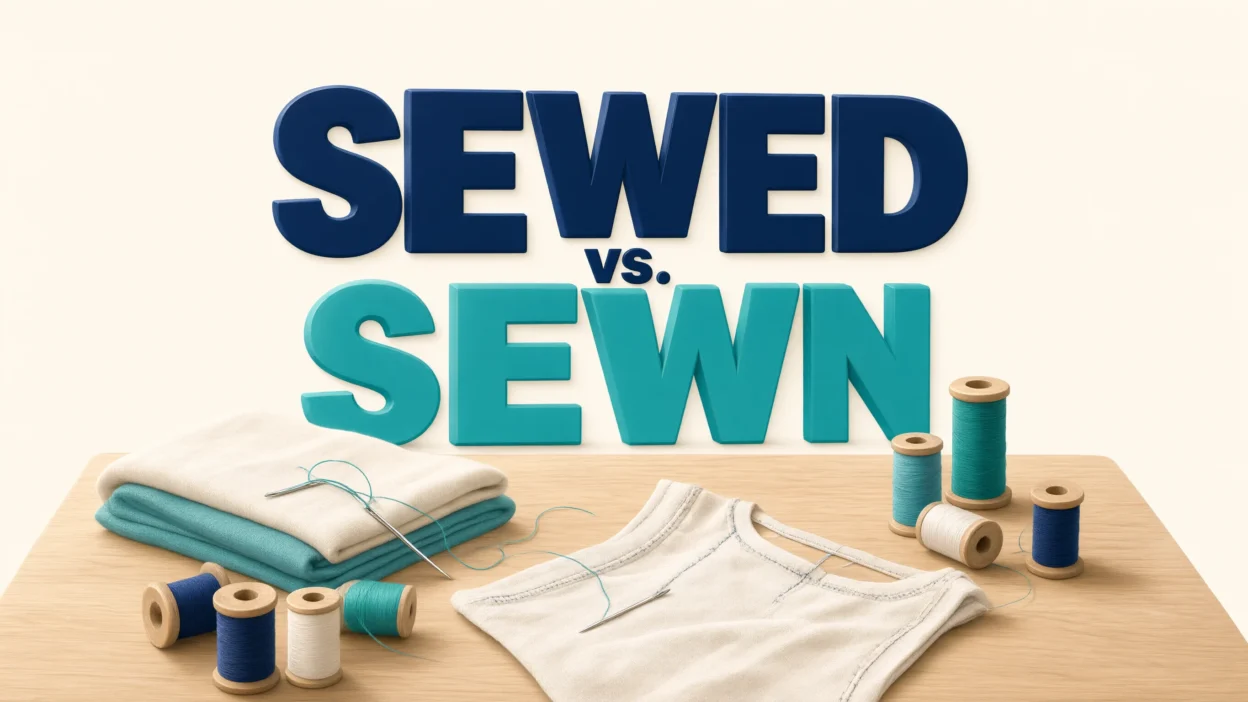
The words sewed and sewn are both correct forms of the verb sew, which means to join fabric or attach something using a needle and thread. However, they are used differently in English. Sewed is the simple past tense of sew, while sewn is usually the past participle, used with helping verbs such as have, has, and had or as an adjective.
For example, you can say, “She sewed a button onto her shirt yesterday” or “She has sewn a button onto her shirt.” Both sentences are correct, but the verb forms serve different grammatical purposes. You may also hear “The dress was sewn by hand,” which describes how the dress was made.
Understanding when to use each word will help you write more clearly, speak naturally, and avoid common grammar mistakes. If you are learning English, improving your writing, or simply checking the correct past tense of sew, this guide explains the difference with simple rules and practical examples.
Quick Answer: Sewed or Sewn?
Sewed is the simple past tense of sew, while sewn is its past participle. Use sewed for a completed past action, such as “I sewed a dress.” Use sewn with helping verbs, as in “I have sewn a dress.” Both forms are correct in standard English.
Why Do People Confuse Sewed and Sewn?
People often confuse these words because both refer to sewing something in the past. English also has many irregular verbs with different past-tense and past-participle forms, such as write, wrote, written and break, broke, broken.
The verb sew follows a similar pattern:
- Base form: sew
- Simple past tense: sewed
- Past participle: sewn or sewed
The last point is important: sewed can also function as a past participle, particularly in some varieties and constructions of English. However, sewn is especially common in perfect tenses and passive constructions.
1. What Does Sewed Mean?
Sewed is the simple past tense of sew. It describes an action that happened and was completed in the past.
Use sewed when talking about making clothes, repairing fabric, attaching buttons, or stitching materials together.
Examples of Sewed in Sentences
- My grandmother sewed a beautiful dress for me.
- I sewed a button onto my jacket yesterday.
- She sewed the torn pocket before leaving home.
- They sewed their costumes for the school play.
- He sewed a small patch onto his backpack.
In each example, sewed describes a completed action in the past.
Simple rule: If you are describing what someone did in the past, sewed is usually the natural choice.
2. What Does Sewn Mean?
Sewn is the past participle of sew. It commonly appears with helping verbs such as have, has, had, is, was, and been, depending on the sentence structure.
It can also function as an adjective to describe something made or joined with stitches.
Examples of Sewn in Sentences
- I have sewn three buttons onto this coat.
- She has sewn a new dress for the party.
- The fabric had been sewn carefully.
- The badge was sewn onto his uniform.
- This is a beautifully sewn jacket.
In these examples, sewn works with a helping verb or describes the finished item.
Simple rule: Use sewn when you need the past participle in a perfect tense or a passive construction, or when describing something stitched together.
Sewed vs. Sewn: Comparison Table
| Feature | Sewed | Sewn |
| Base verb | Sew | Sew |
| Main grammatical form | Simple past | Past participle |
| Common use | Completed past action | Perfect tenses and passive voice |
| Example | I sewed a dress. | I have sewn a dress. |
| Used as an adjective | Less common | Common |
| Correct English? | Yes | Yes |
Remember that sewed can also be used as a past participle in some contexts. For example, “I have sewed the button back on” is grammatical, although many speakers prefer “I have sewn the button back on.”
When Should You Use Sewed or Sewn?
Choosing the right word becomes easier when you look at the sentence structure.
Use Sewed for a Completed Past Action
Use sewed when the sentence describes an action that happened in the past.
Examples:
- I sewed my trousers last weekend.
- She sewed a hole in the curtain.
- My aunt sewed a blanket for the baby.
Use Sewn With Have, Has, or Had
Use sewn in perfect-tense constructions when it follows have, has, or had.
Examples:
- I have sewn the missing button back on.
- She has sewn several dresses this month.
- They had sewn the costumes before the show began.
Although sewed is also possible as a past participle, sewn is often preferred in these sentences.
Use Sewn in Passive Sentences
Passive sentences emphasize the item receiving the action rather than the person performing it.
Examples:
- The dress was sewn by hand.
- The labels have been sewn into the shirts.
- The torn fabric was carefully sewn together.
Use Sewn as an Adjective
Use sewn to describe something that has been stitched.
Examples:
- She wore a hand-sewn dress.
- The sewn edges look neat.
- He bought a finely sewn leather bag.
12 Examples of Sewed vs. Sewn in Sentences
Here are practical examples to help you understand how each form works.
- Sewed: I sewed a new button onto my shirt.
- Sewn: I have sewn a new button onto my shirt.
- Sewed: My mother sewed my school uniform.
- Sewn: My school uniform was sewn by a local tailor.
- Sewed: She sewed a small tear in her jeans.
- Sewn: She has sewn the tear in her jeans.
- Sewed: The tailor sewed the sleeves yesterday.
- Sewn: The sleeves had been sewn before the fitting.
- Sewed: We sewed colorful decorations onto the costumes.
- Sewn: The colorful decorations were sewn onto the costumes.
- Sewed: He sewed a patch onto his backpack last night.
- Sewn: He has sewn a patch onto his backpack.
Notice how sewed commonly tells you what happened, while sewn often appears with a helping verb or describes the finished result.
Common Mistakes to Avoid
Even though both words are correct, some sentence structures require particular attention.
Mistake 1: Using Sewed Instead of Sew in the Present Tense
Incorrect: I sewed clothes every weekend. (If you mean that you do it regularly now.)
Correct: I sew clothes every weekend.
Use sew for present-tense habits and routines.
Mistake 2: Forgetting the Helping Verb
Incorrect: I sewn a dress yesterday.
Correct: I sewed a dress yesterday.
Also correct: I have sewn a dress.
Use sewed for the simple past. Use sewn with the appropriate helping verb in standard perfect-tense constructions.
Mistake 3: Assuming Sewn Is Always Required After Have
Incorrect as an absolute rule: “I have sewed” is always wrong.
Correct: I have sewn the dress.
Also grammatical: I have sewed the dress.
Both past participle forms occur in English, though sewn is often more widely preferred in this construction.
Mistake 4: Confusing Sew With Sow
These are different verbs:
- Sew: to join fabric with a needle and thread.
- Sow: to plant seeds.
Examples:
- She sewed a button onto her coat.
- He sowed seeds in the garden.
Memory Trick: How to Remember Sewed vs. Sewn
Use this easy trick:
- Sewed = did it. “I sewed a dress yesterday.”
- Sewn = have done it or describe the result. “I have sewn a dress.” “The dress is hand-sewn.”
You can also remember the pattern by comparing it with another irregular verb:
- Write → wrote → written
- Sew → sewed → sewn
The pattern is not identical, but it reminds you that the simple past and past participle can have different forms.
American vs. British English: Is There a Difference?
Both sewed and sewn are accepted in American and British English. The main distinction is grammatical rather than regional.
In both varieties:
- “I sewed a dress yesterday” is correct.
- “I have sewn a dress” is correct.
- “The dress was sewn by hand” is correct.
You may encounter sewed as a past participle in either variety, but sewn is a common choice when describing a finished garment or using the passive voice.
If you want a safe, natural choice for most formal writing, use sewed for the simple past and sewn for the past participle.
Similar Words to Sewed and Sewn
Learning related verb forms can make English grammar easier to understand.
| Base verb | Simple past | Past participle |
| Sew | Sewed | Sewn / Sewed |
| Write | Wrote | Written |
| Break | Broke | Broken |
| Speak | Spoke | Spoken |
| Wear | Wore | Worn |
| Tear | Tore | Torn |
| Grow | Grew | Grown |
| Know | Knew | Known |
These verbs show why it is helpful to learn the simple past and past participle together.
Final Verdict: Sewed or Sewn?
Both words are correct, but they are most commonly used in different grammatical situations.
- Choose sewed when describing a completed past action: “She sewed a dress yesterday.”
- Choose sewn when using the past participle in a perfect tense or passive sentence: “She has sewn a dress” or “The dress was sewn by hand.”
Although sewed can also serve as a past participle, sewn is often the preferred choice in these constructions.
FAQs:
1. Is sewed or sewn correct?
Both are correct. Sewed is the simple past tense of sew, while sewn is its past participle. Sewed can also function as a past participle in some constructions.
2. What is the past tense of sew?
The simple past tense of sew is sewed.
Example: “She sewed a new dress last week.”
3. What is the past participle of sew?
The past participle is sewn, although sewed is also used as a past participle.
Example: “I have sewn the button back on.”
4. Is “I have sewed” grammatically correct?
Yes. “I have sewed” is grammatically acceptable because sewed can function as a past participle. However, “I have sewn” is often preferred and may sound more natural to many speakers.
5. Is “the dress was sewed” correct?
Yes, it can be grammatical. However, “the dress was sewn” is a common and natural choice in standard English, especially when describing how a garment was made.
6. Should I say “hand-sewed” or “hand-sewn”?
Hand-sewn is the usual form when describing an item made by hand.
Example: “She wore a hand-sewn dress.”
When describing the action in the simple past, say, “She hand-sewed the dress.”
7. What are the three forms of the verb sew?
The three commonly taught forms are:
- Base form: sew
- Simple past: sewed
- Past participle: sewn or sewed
Remember This
- Sew = present or base form.
- Sewed = simple past tense.
- Sewn = common past participle.
- Sewed can also be used as a past participle.
- “I sewed it yesterday” and “I have sewn it” are both correct.
Conclusion
The difference between sewed and sewn is mainly about how each word functions in a sentence. Sewed is the simple past tense of sew and is commonly used to describe a completed action. Sewn is the usual past participle in constructions such as “has sewn,” “had sewn,” and “was sewn.” Both words are correct, and understanding their grammatical roles will help you use them confidently.
When you are unsure, remember the simple pattern: “I sewed the dress yesterday” describes a past action, while “I have sewn the dress” emphasizes a completed action using the present perfect tense.
For descriptions such as “a hand-sewn dress,” sewn is the natural choice. With these rules and examples, you can choose the right form for everyday conversations, school assignments, and formal writing.

Lucas Smith is a skilled language writer at Synomity.com, passionate about synonyms, vocabulary enrichment, and word meanings. He develops engaging content that helps readers strengthen communication skills and expand their understanding of language.