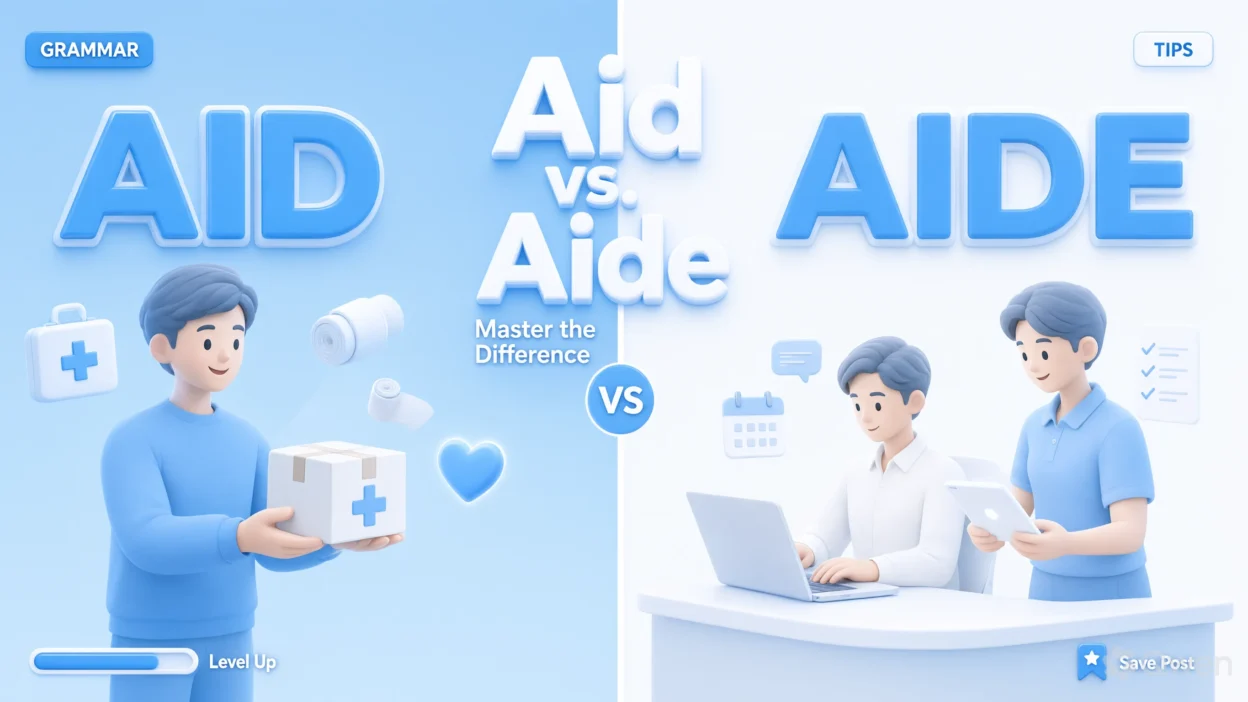
The words aid and aide sound exactly alike, but they have different meanings and uses. If you are unsure if to write aid or aide in a sentence, the difference is simple: aid means help, support, or assistance, while aide refers to a person who helps someone else. Although these words are pronounced the same, they are not interchangeable in writing.
Understanding the difference between aid and aide is important for students, English learners, writers, and anyone who wants to improve their spelling and vocabulary. Both words appear frequently in everyday English, news articles, workplaces, schools, healthcare settings, and government discussions. For example, a country may provide financial aid after a disaster, while a politician may have a personal aide who helps manage daily responsibilities.
In this guide, you will learn the meanings of aid and aide, their grammatical roles, when to use each word, common mistakes, and easy examples to help you remember the difference.
Quick Answer: Aid or Aide?
Aid means help, support, or assistance, and it can be used as a noun or a verb. Aide is a noun that refers to a person who assists someone, usually in a professional or official role. For example, financial aid helps students pay for education, while a teacher’s aide helps a teacher in the classroom.
Why Do People Confuse Aid and Aide?
People often confuse aid and aide because they are homophones. Homophones are words that sound alike but have different meanings, spellings, or grammatical uses.
Both words are pronounced the same way, so you cannot distinguish them by hearing alone. You must understand the meaning of the sentence to choose the correct spelling.
For example:
- The organization provided aid to families. (Help or support)
- The nurse’s aide assisted the patients. (A person who helps)
The difference becomes clear when you look at what the word represents. If you are talking about help or assistance itself, use aid. If you are talking about a person who provides assistance, use aide.
1. What Does Aid Mean?
Aid means help, support, assistance, or something provided to make a situation easier or better. It can refer to money, resources, services, equipment, or actions that help someone in need.
Aid can function as both a noun and a verb.
Aid as a Noun
As a noun, aid refers to help or assistance given to someone.
Examples:
- The government provided financial aid to struggling families.
- The charity sent food aid to the affected communities.
- Medical aid was available to injured people.
- The students received aid for their education.
- International aid helped rebuild the damaged villages.
Aid as a Verb
As a verb, aid means to help, support, or assist someone in doing something.
Examples:
- The volunteers aided the victims of the flood.
- This medicine may aid recovery.
- The teacher aided students with their homework.
- Technology can aid communication.
- The new program will aid small businesses.
When to Use Aid
Use aid when referring to:
- Help or assistance
- Financial support
- Medical support
- Emergency relief
- Educational assistance
- An action that helps someone
Example: The organization provided aid to people affected by the earthquake.
Here, aid means assistance or support, not a person.
2. What Does Aide Mean?
Aide is a noun that refers to a person who helps, assists, or supports someone, often in a professional, official, medical, educational, or administrative role.
An aide usually works alongside another person, such as a teacher, politician, doctor, manager, or senior official.
Aide in Different Contexts
Political aide: A person who assists a politician or government official.
Example: The senator’s aide prepared the documents for the meeting.
Teacher’s aide: A person who helps a teacher manage classroom activities and support students.
Example: The teacher’s aide helped the children complete their assignments.
Medical aide: A person who provides assistance in a healthcare setting.
Example: The medical aide helped the patient get out of bed.
Personal aide: Someone who helps another person with daily tasks or personal responsibilities.
Example: Her personal aide accompanied her to the appointment.
When to Use Aide
Use aide when referring to:
- A person who assists a politician
- A classroom assistant
- A healthcare assistant or support worker
- A personal assistant in certain roles
- Someone who helps another person perform their duties
Example: The principal’s aide answered questions from parents.
Here, aide refers to a person who provides assistance.
Aid vs Aide: Comparison Table
| Feature | Aid | Aide |
| Meaning | Help, support, assistance | A person who provides help |
| Part of speech | Noun and verb | Noun |
| Refers to | Assistance or an action | A person |
| Pronunciation | /eɪd/ | /eɪd/ |
| Example | They received financial aid. | The teacher’s aide arrived. |
| Common phrases | First aid, legal aid, aid workers | Teacher’s aide, political aide, medical aide |
| Can be used as a verb? | Yes | No |
| Word type | Homophone | Homophone |
When to Use Aid vs Aide
Choosing the right word is easier when you focus on whether the sentence refers to assistance or a person.
When to Use Aid
Use aid when the sentence describes help, support, resources, or an action that makes something easier.
Examples:
- The government offered financial aid.
- First aid was provided immediately.
- Volunteers aid elderly people in the community.
- The new software will aid productivity.
- The organization sent emergency aid.
When to Use Aide
Use aide when the sentence refers to a person who assists someone else.
Examples:
- The president’s aide answered the phone.
- A classroom aide helped the students.
- The nurse’s aide checked the patient’s condition.
- His aide organized the schedule.
- The teacher hired an aide to support the children.
Quick Grammar Tip
Ask yourself:
- Am I talking about help or support? → Aid
- Am I talking about a person who helps? → Aide
This simple question will help you choose the correct spelling in most situations.
15 Examples of Aid and Aide in Sentences
Here are 15 practical examples showing how to use both words correctly.
Examples Using Aid
- The charity provided aid to homeless families.
- She applied for financial aid to attend college.
- The doctors offered medical aid to the injured.
- Volunteers came to aid the flood victims.
- Reading glasses can aid people with poor eyesight.
- The country received international aid after the disaster.
- The teacher used visual aids to explain the lesson.
- First aid helped stabilize the injured person.
Examples Using Aide
- The president spoke with his senior aide.
- The teacher’s aide helped the children read.
- A medical aide assisted the elderly patient.
- Her aide arranged the travel schedule.
- The senator’s aide attended the press conference.
- The classroom aide helped maintain discipline.
- The manager asked his aide to prepare the report.
These examples demonstrate that aid refers to assistance or helping, while aide refers to the person who provides assistance.
Common Mistakes When Using Aid and Aide
Because these words sound alike, writers sometimes use the wrong spelling. Here are some common mistakes and their corrections.
| Incorrect Sentence | Correct Sentence |
| The teacher’s aid helped the students. | The teacher’s aide helped the students. |
| The country received financial aide. | The country received financial aid. |
| The senator hired an aid. | The senator hired an aide. |
| Volunteers provided medical aide. | Volunteers provided medical aid. |
| Her personal aid prepared the documents. | Her personal aide prepared the documents. |
Mistake 1: Using Aide for Financial Support
Incorrect: She received financial aide.
Correct: She received financial aid.
Why? Financial aid means money or assistance provided to help someone. It does not refer to a person.
Mistake 2: Using Aid for a Person
Incorrect: The teacher’s aid helped the students.
Correct: The teacher’s aide helped the students.
Why? A teacher’s aide is a person who assists a teacher.
Mistake 3: Confusing Aid as a Verb
Incorrect: The volunteers came to aide the victims.
Correct: The volunteers came to aid the victims.
Why? Aid can be used as a verb meaning to help. Aide is a noun and cannot be used as a verb.
Easy Memory Trick to Remember Aid vs Aide
Here is a simple way to remember the difference:
Aid = Assistance
Both words are short, and aid refers to the help or support itself.
Examples:
- Financial aid
- First aid
- Emergency aid
- Legal aid
Aide = Assistant
Think of the extra letter E in aide as standing for an employee or an individual who helps.
Examples:
- Teacher’s aide
- Senator’s aide
- Medical aide
Remember this simple rule:
Aid is the help. Aide is the helper.
Aid vs Aide in American and British English
The meanings and spellings of aid and aide are the same in American and British English. Both varieties use aid for assistance and aide for a person who provides support.
| Word | American English | British English |
| Aid | Financial aid | Financial aid |
| Aide | Teacher’s aide | Teacher’s aide |
| Aid | First aid | First aid |
| Aide | Political aide | Political aide |
Examples in American English:
- The school offered financial aid.
- The teacher’s aide helped the students.
Examples in British English:
- The charity provided emergency aid.
- The minister’s aide attended the meeting.
There is no regional spelling difference between these two words. The correct choice depends on the meaning, not the country.
Similar Words Related to Aid and Aide
Several words have meanings related to assistance, support, or people who help others. Learning these words can improve your vocabulary and make your writing more precise.
| Word | Meaning | Example |
| Help | To make something easier for someone | Can you help me? |
| Assist | To provide support or help | She assisted the manager. |
| Assistant | A person who helps someone | He works as an assistant. |
| Assistance | Help or support | Thank you for your assistance. |
| Support | To help someone emotionally or practically | They support their family. |
| Relief | Help given during hardship | Relief arrived after the storm. |
| Alleviate | To make pain or difficulty less severe | The medicine alleviated the pain. |
| Abet | To encourage or assist an action, often wrongdoing | He was accused of abetting the crime. |
These words are related to the idea of helping, but they are not always interchangeable. For example, assistant and aide both refer to people who help, while assistance and aid refer to the help itself.
Final Verdict: Which Word Should You Use?
Both aid and aide are correct words, but they have different meanings.
Use aid when you mean help, assistance, support, or an action that helps someone.
- The family received financial aid.
- Volunteers aided the injured people.
Use aide when you mean a person who assists someone, especially in a professional or official role.
- The teacher’s aide helped the students.
- The politician’s aide prepared the speech.
If you remember that aid means help and aide means helper, you will rarely confuse these two words again.
FAQs:
1. Is It Aid or Aide?
Both words are correct, but they have different meanings. Aid means help or assistance, while aide refers to a person who helps someone. Use aid for support or assistance and aide for an assistant or helper.
2. What Is the Difference Between Aid and Aide?
The difference is that aid refers to help, support, or assistance, while aide refers to a person who provides help. For example, financial aid is money or assistance, whereas a teacher’s aide is someone who helps a teacher.
3. Is Aide a Person or a Thing?
Aide refers to a person. It is a noun used for someone who assists another person, often in a professional or official position. Examples include a political aide, medical aide, and teacher’s aide.
4. Is Aid a Verb or a Noun?
Aid can be both a noun and a verb. As a noun, it means help or assistance. As a verb, it means to help or support someone. For example, “The charity provided aid” and “The volunteers aided the community.”
5. Is Teacher’s Aid or Teacher’s Aide Correct?
Teacher’s aide is the correct spelling when referring to a person who assists a teacher. The word aide means an assistant or helper. Teacher’s aid would refer to help or assistance provided to a teacher rather than the person helping.
6. Is Financial Aid or Financial Aide Correct?
Financial aid is correct. It refers to money, funding, or financial assistance provided to someone who needs support, such as a student paying for college. Financial aide is incorrect in this context because an aide is a person.
7. Are Aid and Aide Homophones?
Yes. Aid and aide are homophones because they have the same pronunciation but different spellings and meanings. Aid means help or assistance, while aide means a person who provides help.
Remember This
- Aid = Help, support, or assistance.
- Aide = A person who helps.
- Aid can be a noun or a verb.
- Aide is a noun.
- Financial aid is money or support.
- A teacher’s aide is a person.
- Both words have the same pronunciation.
- The correct spelling depends on the meaning of the sentence.
Conclusion
Understanding the difference between aid and aide is simple once you know what each word represents. Aid refers to help, support, or assistance and can also be used as a verb to describe helping someone.
Aide, on the other hand, is a noun that refers to a person who assists someone in a professional, personal, or official role. Although both words sound alike, their meanings and grammatical uses are different.
The easiest way to remember the difference is to think of aid as the help and aide as the helper. Use aid when discussing financial support, emergency assistance, medical help, or an action that helps someone.
Use aide when talking about a teacher’s assistant, political assistant, medical support worker, or another person who provides assistance. With this simple rule and a little practice, you can use both words confidently in your everyday writing.