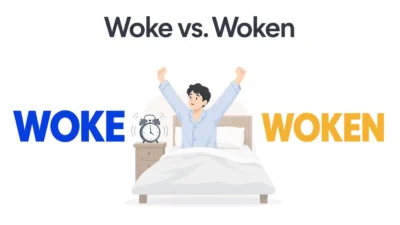
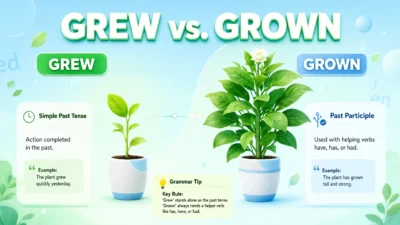
The difference between swore vs. sworn is simple once you understand how the verb swear works. Swore is the simple past tense of swear, while sworn is the past participle. Both words describe actions related to making a promise, taking an oath, or using offensive language, but they are used in different grammatical situations.
For example, you can say, “She swore to tell the truth” because the sentence describes a completed action in the past. However, you would say, “She has sworn to tell the truth” because the present perfect tense requires a past participle. Choosing the wrong form can make your sentence grammatically incorrect, even when your meaning is clear.
Understanding when to use swore and sworn will help you write more accurately, speak more naturally, and avoid common English grammar mistakes. In this guide, you will learn their meanings, grammatical differences, sentence patterns, and practical examples that make the distinction easy to remember.
Quick Answer: Swore vs. Sworn
Swore is the simple past tense of swear, used for an action completed in the past. Sworn is the past participle, usually used with helping verbs such as have, has, had, or be. For example, “He swore an oath yesterday” and “He has sworn an oath.”
Why Do People Confuse Swore and Sworn?
People often confuse these words because they are two forms of the same irregular verb. Unlike regular verbs, which typically add -ed to form the past tense and past participle, swear changes to swore and sworn.
Both forms can refer to promises, formal oaths, or expressions of anger. Their meanings are closely related, but their grammatical functions are different.
The easiest way to distinguish them is to look at the sentence structure. If you are describing a completed past action without a helping verb, swore is usually correct. If you are using a perfect tense or a passive construction, sworn is often the appropriate form.
What Does Swore Mean?
Swore is the simple past tense of the verb swear. It describes something someone did in the past, such as making a promise, taking an oath, or using a swear word.
Examples of Swore in Sentences
- She swore to keep the secret.
- He swore that he had told the truth.
- They swore an oath before taking office.
- My brother swore when he dropped his phone.
- I swore I would never make that mistake again.
In each example, swore describes a past action or statement.
How to Use Swore Correctly
Use swore when narrating something that happened in the past.
Sentence pattern: Subject + swore + remaining sentence.
Examples:
- The witness swore to tell the truth.
- He swore he would return.
- She swore at the driver after the accident.
Remember that swore does not usually follow have, has, or had when forming a perfect tense. In those constructions, use sworn instead.
What Does Sworn Mean?
Sworn is the past participle of swear. It is commonly used with have, has, and had to form perfect tenses. It can also appear in passive constructions and expressions such as sworn enemy.
Examples of Sworn in Sentences
- I have sworn to protect my family.
- She has sworn that she is innocent.
- They had sworn an oath before the ceremony.
- The witness was sworn in before giving evidence.
- They have been sworn enemies for years.
In these sentences, sworn works with a helping verb or as part of an established expression.
How to Use Sworn Correctly
Use sworn when the grammar requires a past participle.
Sentence pattern: Subject + have/has/had + sworn.
Examples:
- He has sworn to tell the truth.
- We had sworn to support the team.
- She has sworn never to reveal the secret.
You can also use sworn in passive structures:
- The new officials were sworn into office.
- The witness was sworn in before testifying.
Swore vs. Sworn: Comparison Table
| Feature | Swore | Sworn |
| Verb form | Simple past tense | Past participle |
| Base verb | Swear | Swear |
| Common structure | Subject + swore | Subject + have/has/had + sworn |
| Helping verb required | Not usually | Usually, in perfect tenses |
| Example | He swore yesterday. | He has sworn before. |
| Passive use | Not normally used as a past participle | The official was sworn in. |
| Common expression | Swore an oath | Sworn enemy |
The key difference is grammatical, not a difference in the basic meaning of the verb.
When to Use Swore and When to Use Sworn
Choosing the correct word becomes easier when you identify the tense and structure of your sentence.
Use Swore for a Completed Past Action
Choose swore when you are talking about an action that happened in the past.
Examples:
- She swore she would help me.
- He swore at the referee during the match.
- The politician swore to serve the public.
Use Sworn With Have, Has, or Had
Use sworn when forming the present perfect or past perfect tense.
Examples:
- I have sworn to keep my promise.
- She has sworn that she saw the incident.
- They had sworn to remain loyal.
Use Sworn in Passive Constructions
The past participle sworn is also used when the subject receives an action.
Examples:
- The judge was sworn in yesterday.
- The president was sworn into office.
- The witness had been sworn before answering questions.
Use Sworn in Established Expressions
Some phrases regularly use sworn, even when they do not describe a perfect tense.
Examples:
- They are sworn enemies.
- She is a sworn defender of free speech.
- He made a sworn statement.
12 Examples of Swore vs. Sworn in Sentences
The following examples show how each form works in everyday English.
- Swore: He swore to tell the truth during the hearing.
- Sworn: He has sworn to tell the truth during the hearing.
- Swore: She swore she had locked the door.
- Sworn: She had sworn that the door was locked.
- Swore: I swore I would finish the assignment.
- Sworn: I have sworn to finish the assignment.
- Swore: They swore an oath before starting their duties.
- Sworn: They have sworn an oath before starting their duties.
- Swore: The angry customer swore at the cashier.
- Sworn: The customer has sworn at staff members before.
- Swore: The new leader swore to uphold the law.
- Sworn: The new leader was sworn into office on Monday.
Notice that examples 1, 3, 5, 7, 9, and 11 use swore to describe past actions. The other examples use sworn with a helping verb or within a passive construction.
Common Mistakes When Using Swore and Sworn
Even experienced English speakers sometimes mix up irregular verb forms. Here are the mistakes to watch for.
Mistake 1: Using Swore After Have
Incorrect: She has swore to keep the secret.
Correct: She has sworn to keep the secret.
Why? The present perfect tense uses have or has followed by a past participle.
Mistake 2: Using Sworn Alone for the Simple Past
Incorrect: He sworn an oath yesterday.
Correct: He swore an oath yesterday.
Why? The simple past tense requires swore, not sworn, in this sentence.
Mistake 3: Confusing Past Tense With Past Participle
Incorrect: They had swore to help us.
Correct: They had sworn to help us.
Why? The word had signals the past perfect tense, which requires sworn.
Mistake 4: Forgetting the Helping Verb
Incorrect: I sworn to tell the truth.
Correct: I swore to tell the truth.
Also correct: I have sworn to tell the truth.
Why? Use swore for the simple past or add an appropriate helping verb before sworn.
Mistake 5: Assuming Sworn Is Only Used With Have
Incorrect assumption: Sworn can only follow have, has, or had.
- The witness was sworn in.
- They are sworn enemies.
- The statement was sworn under oath.
Why? Past participles can also appear in passive constructions and adjective-like expressions.
Memory Trick: How to Remember Swore vs. Sworn
Use this simple trick:
Swore = before or during a past-tense story.
Sworn = with a helping verb or in a phrase like “sworn enemy.”
Remember the common verb sequence:
Swear → Swore → Sworn
- Today: I swear to help.
- Yesterday: I swore to help.
- Before now: I have sworn to help.
You can also memorize this sentence: “Yesterday I swore, but I have sworn before.”
This short example demonstrates both forms in their correct grammatical positions.
Swore vs. Sworn in American and British English
There is no major difference between American and British English in the standard grammatical use of swore and sworn. Both varieties use swore as the simple past tense and sworn as the past participle.
| Usage | American English | British English |
| Simple past | He swore an oath. | He swore an oath. |
| Present perfect | He has sworn an oath. | He has sworn an oath. |
| Passive construction | She was sworn in. | She was sworn in. |
| Common expression | Sworn enemy | Sworn enemy |
Both varieties use these forms in legal, formal, and everyday contexts. Differences in how speakers use the present perfect and simple past can occur between the varieties, but the forms swore and sworn themselves remain the same.
Similar Words Related to Swore and Sworn
Understanding other irregular verbs can help you recognize the same grammatical pattern.
| Base Verb | Simple Past | Past Participle |
| Swear | Swore | Sworn |
| Speak | Spoke | Spoken |
| Break | Broke | Broken |
| Choose | Chose | Chosen |
| Write | Wrote | Written |
| Freeze | Froze | Frozen |
| Steal | Stole | Stolen |
| Wake | Woke | Woken |
For example, you say “She spoke yesterday” but “She has spoken before.” Similarly, you say “He swore yesterday” but “He has sworn before.”
These verbs follow comparable patterns, although irregular verbs must often be learned individually.
Final Verdict: Swore or Sworn?
The correct choice depends on the grammatical structure of your sentence.
- Swore is the simple past tense: “He swore to help me.”
- Sworn is the past participle: “He has sworn to help me.”
- Sworn also appears in passive constructions: “He was sworn into office.”
If your sentence contains have, has, or had as part of a perfect tense, use sworn. If you are describing a completed past action without a helping verb, use swore.
FAQs:
1. Is swore or sworn correct?
Both are correct, but they serve different grammatical purposes. Swore is the simple past tense of swear, while sworn is the past participle. Use “I swore yesterday” and “I have sworn before.”
2. Is sworn the past tense of swear?
No. Swore is the simple past tense of swear. Sworn is its past participle, used in perfect tenses, passive constructions, and expressions such as sworn enemy.
3. Should I say “I swore” or “I have sworn”?
Both are grammatically correct. Use “I swore” to describe a completed past action, often with a specific past-time reference. Use “I have sworn” to connect the action to the present or describe an experience without specifying a finished past time.
4. Is it “had swore” or “had sworn”?
The correct phrase is “had sworn.” The past perfect tense requires had followed by a past participle. For example, “She had sworn to keep the secret.”
5. Is it correct to say “I sworn”?
Not in standard English when sworn is used as a verb without a helping verb. Say “I swore” or “I have sworn.” However, sworn is correct in sentences such as “I was sworn in.”
6. What is the third form of swear?
The three principal forms are swear, swore, sworn. Swear is the base form, swore is the simple past, and sworn is the past participle.
7. What does sworn mean in “sworn enemy”?
In sworn enemy, the word sworn describes someone regarded as a deeply established or committed enemy. The expression emphasizes strong, long-standing hostility rather than describing a perfect-tense action.
Remember This
- Swear = present or base form.
- Swore = simple past.
- Sworn = past participle.
- Say “He swore yesterday.”
- Say “He has sworn before.”
- Say “He was sworn into office.”
The most important rule is to match the verb form to the sentence structure.
Conclusion
Understanding the difference between swore and sworn is an important step toward using English irregular verbs correctly. Although both words come from swear, they are not interchangeable. Swore describes a completed past action, while sworn is the past participle used in perfect tenses, passive constructions, and established expressions.
To avoid mistakes, remember the sequence swear, swore, sworn and pay attention to helping verbs. Practice with simple sentences such as “She swore to help” and “She has sworn to help.” With regular practice, you will recognize the correct form more quickly and use both words confidently in everyday conversations, academic writing, and formal situations.

John Morrison is a dedicated content writer at Synomity.com, focused on synonyms, vocabulary development, and word meanings. He creates clear, educational resources that help readers improve language skills and communicate with confidence.